Author, Philosopher, Theologian

Tag: Ethics

  • What Prices Tell Us About Ourselves

    What Prices Tell Us About Ourselves

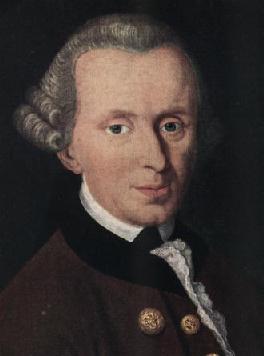
    Immanuel Kant, painting by Johann Gottlieb Becker, 1768 — Schiller National Museum, Marbach, public domain

    What Prices Tell Us About Ourselves

    7.7 billion litres of cola and other soft drinks are produced in Germany every year. From next summer, they will carry an additional tax of up to 38 cents per litre. About eight times as much petrol and diesel is filled up in Germany every year. Every litre of that currently enjoys a tax break of around 17 cents through the Tankrabatt, the fuel tax rebate. – According to Niklas Luhmann, prices are information through which the economic system reaches an understanding with itself and about itself. So what is politics trying to tell us when it raises one price and lowers the other?

    Theory number 1: Rising prices are scarcity signals. – According to Luhmann, however, they represent only scarcity on markets, not necessarily real scarcity. A look at the world situation nevertheless shows that fuel is also really scarce; sugar, too, is probably becoming scarcer this year because of poor harvests. – Yet the state amplifies one price signal and dampens the other.

    Theory number 2: Taxes serve to finance the state. – The budgets of the Länder and the federal budget are both under pressure. Depending on one’s economic or political position, one can raise taxes to consolidate the budgets, or lower taxes to stimulate growth and thereby consolidate the budgets. The state does both at the same time.

    Theory number 3: Prices have an incentive effect. – When something becomes more expensive, less of it is consumed, because individual cost-benefit calculations shift. If that were so, the state would have an interest in less sugar but more petrol and diesel being consumed. – That holds for sugar, because excessive sugar consumption causes health damage that costs the health system a great deal of money. But it does not hold for diesel and petrol, because the transport sector would have to reduce CO2 faster so that Germany as a whole can meet its international obligations.

    At first glance, there seems to be no logic behind it. The public mostly contents itself with discussing particular interests. Sometimes it points to the inconsistency of politics. But could it be that this behaviour is not so inconsistent after all? Could it be that behind it lies a rationality that has long since impregnated all of us, but which we are reluctant to face?

    It is the egoistic perspective of the individual utility maximiser, that straw man of homo oeconomicus who (supposedly) does not exist in reality, that explains political action: The dearer cola hurts one’s own wallet, but it also benefits one’s own health. The benefit to the health system is a collateral benefit that we accept because we get something out of it too. Presumably, that is why a majority in surveys supports it. – Dearer petrol, by contrast, would hurt one’s own wallet and benefit only future generations. That is why in June more than 60% of Germans were still in favour of extending the Tankrabatt.

    There is research showing that human beings are not egoistic utility maximisers. Philosophers, psychologists and economists have shown that people can act differently, and want to act differently, from optimising themselves always and everywhere. A famous empirical study from 1997 on the acceptance of a nuclear waste repository beneath a Swiss village showed that approval fell when the residents were offered money. Some things simply cannot be paid for.

    For the political system, we would need this other kind of person. Living together in a community demands compromises and sometimes personal “sacrifices”. There is no social equilibrium if everyone insists on optimising their own utility function. Amartya Sen already objected to this in 1977, arguing that a society that relies only on personal advantage cannot function.

    Adam Smith did advise us not to rely on the baker’s benevolence when we buy our bread, but he also knew that this behaviour does not exhaust what it means to be human:

    “And hence it is, that to feel much for others and little for ourselves, that to restrain our selfish, and to indulge our benevolent affections, constitutes the perfection of human nature.” (Adam Smith, The Theory of Moral Sentiments, 1759, I.i.5.5)

    Immanuel Kant, too, distinguishes between the pragmatic law, which addresses the human being as someone who seeks their own happiness and optimises their benefit, and the moral law, which addresses them as a rational being and affirms their dignity. It is the setting aside of one’s own benefit that makes the human being a human being. It is their awareness of being able to commit themselves to a higher cause that gives them dignity. – That distinguishes economically rational action from law, which according to Kant is to be founded on the law of freedom: Law applies unconditionally, whether I want it or not; the price applies depending on my ability or willingness to pay. Before the law all are equal; before the price they are not.

    Now, the state has long intervened in the economic system with taxes and levies in order to put a price on so-called externalities. In 1920, the British economist Pigou proposed using the price so that those who cause harm bear the damage they inflict on others. (Pigou 1920; Edenhofer/Franks/Kalkuhl 2021) Politics and law nevertheless went on for decades to work with bans, limits and standards, and even in Germany price signals long counted as hardly feasible politically. Only since the early 1990s, when Finland and Sweden introduced the first CO2 taxes, has the price become a political instrument. Starting from Gary Becker’s rational choice theory, the idea of incentives begins to spread. In 2003, Richard Thaler and Cass Sunstein proposed steering people through the design of their choice situation so that they themselves end up better off. From this develops the idea of “nudging”, of gentle pushes. The sugar tax goes one step further, it changes the price. Yet the price is no longer merely a means of internalising externalities and protecting others from me. The price becomes an instrument for protecting me from myself.

    One resorts to the price because it is perceived as less restrictive of freedom than a ban. But prices address, after all, the economically rational or pragmatically acting part of the human being, not the part oriented towards the common good. If politics increasingly communicates through prices instead of seeking democratic discourse, it ends up promoting a society whose interaction resembles market behaviour more than democratic coexistence. That people in such an environment also come to see the state only as a supplier of citizen benefits, and are bound to be disappointed, should surprise no one.

  • Not everything is rewarded

    Not everything is rewarded

    Not everything is rewarded

    The limits of economic rationality

    “What should I do?” – Immanuel Kant defined this question as one of the core questions of what makes a person human. Today, we usually answer this question with: “What makes me happy and satisfied.” We don’t necessarily do what others expect of us, but what we think will make our lives better. – We follow our preferences and optimise what seems useful to us. Since we assume that everyone does this, companies promise bonuses to increase employee performance and politicians invent incentive mechanisms to guide our behaviour. In this way, we hope to bring together what society demands and what individuals want.

    The American economist Gary Becker was awarded the Nobel Prize in Economics in 1992 for his theory that all human behaviour follows such economic utility considerations. He wanted to explain illegal parking, career and partner choices, the number of children, discrimination against minorities, even suicide and selflessness with rational, benefit-maximising decisions by people. The methodology of classical economics could be applied to all areas of society and all types of optimisation goals. People optimise their utility not only in monetary terms, but in the all the ways they perceive it.

    We know from psychology and experimental economic research that people do not always act rationally and that they are prepared to put their own immediate advantages behind in favour of long-term fair cooperation. However, Becker’s insights have had an impact beyond economics and continue to shape public discourse to this day: “Performance must be worthwhile”, “Good wages for good work”, “Incentives for ecological behaviour”,… – the entire political spectrum shares the economic perspective on life. Hardly anyone still assumes that people do something because it is the right thing to do or because decency demands it. We invest in education because it is profitable. We appoint women to management boards because it has economic advantages. The world is a business case. “What’s in it for me?” has become the test question for “What should I do?”.

    Economics alone is not responsible for this economic transformation of our thinking. The roots lie in modern philosophy, which has characterised our Western thinking and actions for almost four hundred years. Its basic idea is: I am free to recognise and to shape the world. – This is based on two assumptions: (1) I am aware of myself and my freedom. (2) I and the world are part of a rational system. – Today, we take this for granted. But before modernity, people saw themselves as being born into a community by fate. One’s own place was predetermined, the world largely eluded one’s own cognitive and creative possibilities, numinous forces ruled in it. One was dependent on institutions and tradition.

    The self-centredness

    With the discovery of new continents and the realisation that the earth orbited the sun, the traditional knowledge of the world became uncertain in the early modern era. In the mid-17th century, the French mathematician and philosopher René Descartes therefore sought a new foundation for the sciences, a foundation that would be more reliable than the traditional writings of the Bible or Greek philosophy.

    He found this foundation in the thinking subject: if one could doubt everything, one could not doubt that one doubts. As long as one doubts, one must necessarily exist. Even God cannot order me to stop doubting. This is why Descartes replaces God at the centre of the world with the thinking ego. The sentence “I think, therefore I am” was born.

    It was only logical to declare self-preservation the highest virtue. Greek philosophy still answered the question “What should I do?” primarily on the basis of the doctrine of the state, while Christian theology answered it on the basis of the doctrine of God. Now the question “What is useful to me? What makes me happy?” takes centre stage. The criterion for a successful life is no longer a functioning state or God-pleasing behaviour, but individual benefit. “The more a person strives and is able to seek what is useful to him […], the more virtuous he is,” wrote the Dutch philosopher Spinoza in the mid-17th century. This idea became the principle of utilitarianism in the late 18th century and found its way into Adam Smith’s economic ideas: A good society is one in which the utility or happiness of individuals is maximised. The pursuit of happiness becomes a human right.

    The rational system

    Meditations on one’s own consciousness have not only existed since the modern age. But before that, they seek the foundation of the ego not in its self-awareness, but in the incomprehensibility of God. In humility, they confess the limitations of the subject. However, as soon as the foundation of cognition is shifted to the thinking ego, there must and can no longer be any unfathomable secrets as a matter of principle. The paradox that many things were nevertheless de facto unknown was solved in time through the idea of progress. We did not fundamentally not understand; we did not yet understand. And what was not yet understood could be categorised into a rational system and then researched.

    Gary Becker’s claim to explain all behaviour rationally is founded here. The German philosopher Georg Wilhelm Friedrich Hegel tried his hand at this two hundred years ago. For him, too, human behaviour and the world can be explained rationally. He did not yet use economic concepts for this, but rather concepts from the philosophy of consciousness. For him, God is an absolute, world-shaping reason that would become fully conscious in human history. The progress of history would eliminate all remaining differences. The equations work out in the end because God, man and the world are parts of a rational system.

    This strictly logical approach was attractive to the emerging economy of the time which was faced with the question of how a functioning community could be created from individual interests. In its answer, it followed Hegel: through a rational system. The Prussian lawyer and senior civil servant Hermann Gossen tried his hand at a system of world equations 1854. With detailed calculations, he wanted to visualise the invisible hand and show how the egoism of individuals must inevitably lead to the common good. Systematisation did not stop at economics; the management of companies was also rationalised. With his book The Principles of Scientific Management, Frederick Taylor laid the foundations of business administration in 1911. 

    The method was so successful that today it is no longer only used in business: Sports clubs, theatres and museums, even public authorities are “managed”; that is, run according to rational, systematic criteria. All areas of society can be expressed in utility functions. Their development can be predicted, and their actors can be induced to behave in a certain way through incentives. Economic models and business strategies are based on this, which aim to rationally depict the world as a whole. Where there is still uncertainty, we hedge our bets on the markets, whose pricing ensures that the equation works out at all times.

    The limits of reason in the encounter with the Other

    Modernity set out to fight for the individual and their freedom. Its tool was reason, which in its economic form brought us unimagined prosperity that made material independence possible for many in the first place. But reason, if it sets itself up as absolute, has a downside: if the rational system is supposed to explain everything, then there is no room for individuality or otherness. Philosophically, the other becomes a function of my thinking, and economically, a variable of my utility function. The unknown in an equation is always already the known, stated Theodor W. Adorno and Max Horkheimer in their analyses of the Dialectic of Enlightenment.

    If you want to prevent the absolute systematisation of the world, as was attempted in the totalitarianisms of the 20th century, then you must not level out the difference between the other and me. The other must not become part of my system, neither in thought nor in action. The French philosopher Emmanuel Levinas therefore placed the difference between the other person and me at the beginning of my thinking. It does not begin with the rational ego that organises its relationship to the world. It begins with the other person who looks at me and to whom I must relate. The question that arises for me is not: “How do I become happy?”, but: “How do I justify the right to dispute his place in the world?” Before I can claim a right to the pursuit of happiness, even to life or freedom for myself, my existence needs to be justified to others. Levinas quotes Dostoyevsky: “Each of us is guilty of everything before everyone, and I am the guiltiest of all.”

    This perspective is alien to us. We have become accustomed to looking at and for ourselves first and foremost: Self-realisation at work, work-life balance, mindfulness of our own needs – these are our topics. We even tell ourselves that we are criticising the system, but in reality, it is hard to imagine more economically rational behaviour. We also teach our children this: Education is not an end in itself, and commitment is not a service to others. No: good grades guarantee a good salary, and voluntary work increases the chances of being hired. – As with rats in animal experiments: there is a reward for good behaviour. Our new fundamental question therefore seems only logical: “Why should I do something if I don’t benefit from it myself?”

    Immanuel Kant would have replied: For a successful life, it is not enough to increase one’s utility and become happy, one must also prove oneself worthy of bliss. For him, there were two possible answers to the question “What should I do?”: the economic-pragmatic one asks what is useful to me and what makes me happy. The moral one focuses on decency and human dignity, which consist of acting in favour of others, even and especially when it does not benefit me. It cannot be traced back to pragmatics. Decency is not a preference of the individual, but an attribution of others.

    Levinas once said that “after you”, giving way to others, is the core of morality: unintentional renunciation. Working for others. Not being a contemporary of his success. – One could accuse this attitude of being naive. Society cannot be organised in this way. But neither can the fact that the western middle and upper classes are primarily concerned with their own well-being. It won’t work without a little dignity and decency. We cannot demand or promise a reward for everything we do for others. Perhaps it is naive to believe that the other person is a good person. This has always been the argument against a society that is based on decency. But that I am a good person is neither a question of faith nor is it naïve. It is my decision and my responsibility.

    Translation of a text published on 29 December 2024 in the Frankfurter Allgemeine Sonntagszeitung