Author, Philosopher, Theologian

Tag: Demokratie

  • Say, what is

    Say, what is

    “To say what is”

    “To say what is.” – But what, exactly, is what is?

    This week SPIEGEL put the AfD’s candidate for the office of Minister-President of Saxony-Anhalt on its cover. Since then, criticism has been raining down on the editorial team, from right to left, from politicians and from other media. The newsmagazine is being criticized with rare unanimity.

    Dirk Kurbjuweit of SPIEGEL justifies the editorial decision with the founder’s mandate: “Sagen, was ist” – translated by SPIEGEL itself as “Tell it like it is”, but more accurately rendered as “To say what is.” Invoking the same phrase, PIONEER’s Gabor Steingart senses that SPIEGEL is “on its way to becoming a left-wing Fox News.” He is no longer saying, he claims, what is, but practicing opinion journalism instead.

    But what, exactly, is that – what is? Or, asked with Aristotle: “τί τὸ ὄν (tí tò ón) – what is being?” – Contrary to the assumption, and the claim, made by both SPIEGEL and PIONEER, that one can simply say what is, Aristotle already explained: “Being is said in many ways” – τὸ ὂν λέγεται πολλαχῶς (to on legetai pollachōs). He develops a theory of categories that order our speech about being: quantity, quality, position, relation, and so on.

    Simply put: the word is means something different each time, depending on whether I say: It is hot. Or: She is more intelligent than he is. Or: Friedrich Merz is Chancellor. Or even: Friedrich Merz is a good Chancellor.

    Aristotle identified around ten categories in which being can be predicated. Much of what something or someone is, is changeable. The apple is first unripe, then ripe. It is first on the tree, then on the ground. It is mine or yours. – Yet there is something that the apple itself is, its ousia, as Aristotle calls it, its substance or essence, as the Latin translated it, or even the hypokeimenon, the underlying, from which the modern subject emerged.

    If we want to say what is, we are searching for that (unchanging, true) essence of things. The core, the underlying. That is the claim of SPIEGEL, and the accusation levelled at PIONEER. But even the ancient Greeks already sensed they were onto a paradox here. Plutarch tells of the “Ship of Theseus”, whose planks were, one by one, all replaced. Some claimed the ship had remained the same throughout; others, that it was no longer the same. How, then, is one still to say what is?

    We are cutting radically short here (and impermissibly so): philosophy arrived at the insight that the essence of a thing is not an inherent property, but a linguistic attribution.

    Language is the house of Being. In this home, man dwells” (Heidegger, Letter on Humanism, 1946)

    Because we dwell in it, we cannot get beyond language by means of language. The problem with saying what is does not lie in the is. It lies in the saying.

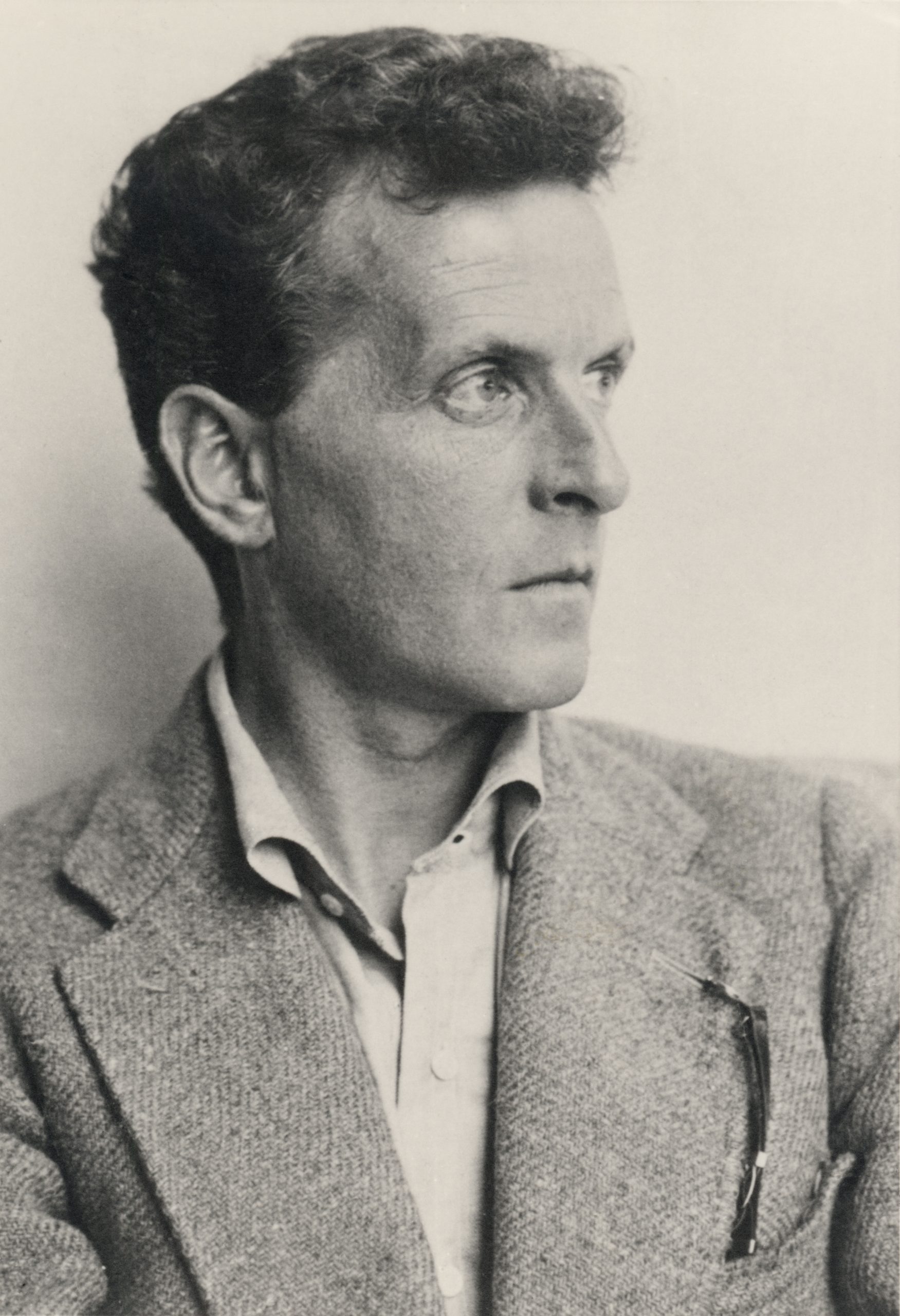
    “The limits of my language mean the limits of my world” (Wittgenstein, Tractatus 5.6)

    That is why the world looks different in different languages (Guy Deutscher). Reality does not exist in pure form.

    Language itself has no fixed point, but consists of mutual references (Saussure). At the latest since language models started formulating all manner of impressive sentences without ever having seen the world, this much is clear. But it also means that we can only make statements about whether something is true or is false within a (linguistic) reference system.

    This insight does not open the door to absolute relativism: for once we have committed to a reference system, true and false statements are entirely possible within it. Whoever accepts the reference system of medicine must accept that measles vaccines save lives. Whoever accepts the reference system of physics (and most of us rely on the brakes in our car) must accept that global warming is owed to the CO2 emissions of the recent past. – One can, of course, deny both; but then one finds oneself in a (performative) self-contradiction and can no longer be taken seriously, as Habermas and Apel pointed out.

    SPIEGEL now manages the feat of entangling itself in a contradiction while also uttering a tautology:

    “The AfD is here, unfortunately it is strong and therefore relevant, which is why it is the subject of our enlightening coverage, in every form.” (emphasis mine)

    What it is really saying is: “The AfD is spoken about, unfortunately it is spoken about a great deal, which is why we speak about it.”

    “The AfD is spoken about, therefore we speak about it.” – That is the obvious part, the tautology: a = a. And: “Unfortunately it is spoken about a great deal, therefore we (too) speak about it.” That is the contradiction: a ≠ a.

    In a single sentence, SPIEGEL thus paces out the boundaries of Western logic:

    “Contradiction is the outer limit of propositions, tautology their substanceless centre” (Wittgenstein, Tractatus, 5.143)

    But the situation is more complicated still: where medicine and climate science observe changes in a system that are independent of our language, the political system offers no such thing. For the political system consists of nothing but language. Politics acts through language. Laws are language. And elections, too, are linguistic utterances. Even the order to exercise the state’s monopoly on the legitimate use of force is issued in linguistic form. This is the great challenge in describing discourses in and about politics, society and culture: language does not simply say what is – it creates the reality it describes.

    When the AfD candidate signs the SPIEGEL cover, he makes use of a cultural symbol and changes reality: an enlightening wanted poster becomes an autograph card, the criminal becomes a pop star. This is how language shapes reality. It does so explicitly, as John Austin set out in his speech act theory. But it also does so implicitly, whenever it merely claims to say what is – or accuses others of failing to do just that.

    Every article, every comment shifts the frame of reference. Dirk Kurbjuweit writes: “We do not suffer from the hubris of believing that our journalism can influence election outcomes.” – That is not hubris. That is how public discourse works.

  • Who is actually arguing when German Railway is arguing with German Television?

    Who is actually arguing when German Railway is arguing with German Television?

    Who is actually arguing when German Railway is arguing with German Television?

    On 23 July, German Public Television ZDF broadcast the documentary “Our Railways: Loved, Hated – Dangerous?” (link to the documentary). Deutsche Bahn responded, pointing out various errors and inaccuracies, which ZDF subsequently corrected to some extent. (Details here)

    However, the dispute entered a second round. Last Thursday, the German newspaper F.A.Z. reported that Deutsche Bahn was demanding the article be taken down:

    “Deutsche Bahn […] is entitled to corporate personality rights. It need not accept one-sided reporting.” (F.A.Z., 30 July 2026)

    According to the F.A.Z., Deutsche Bahn’s lawyer refers to a ruling by the Federal Court of Justice (Case No. VI ZR 346/24). – And this is where it gets interesting.

    Not only because this ruling addresses the question of at what level of support for the AfD and right-wing organisations one must accept being publicly labelled “far-right”, or because the Federal Court of Justice concludes that the term “far-right” is “negative” and “defamatory”. (For details, see here) – That in itself would be worth an essay.

    No, what makes it interesting is that Deutsche Bahn’s lawyer argues that, as a commercial enterprise, the company is a legal person and is entitled to the same fundamental rights as the claimant before the Federal Court of Justice who felt his honour had been violated – although that claimant was a natural person.

    By claiming fundamental rights as a legal person, Deutsche Bahn is following a long tradition: the very first public limited company to be established as an independent legal form was a transport company. And the first landmark judgements on the question of fundamental rights for companies were brought by a railway company. – But more on that later.

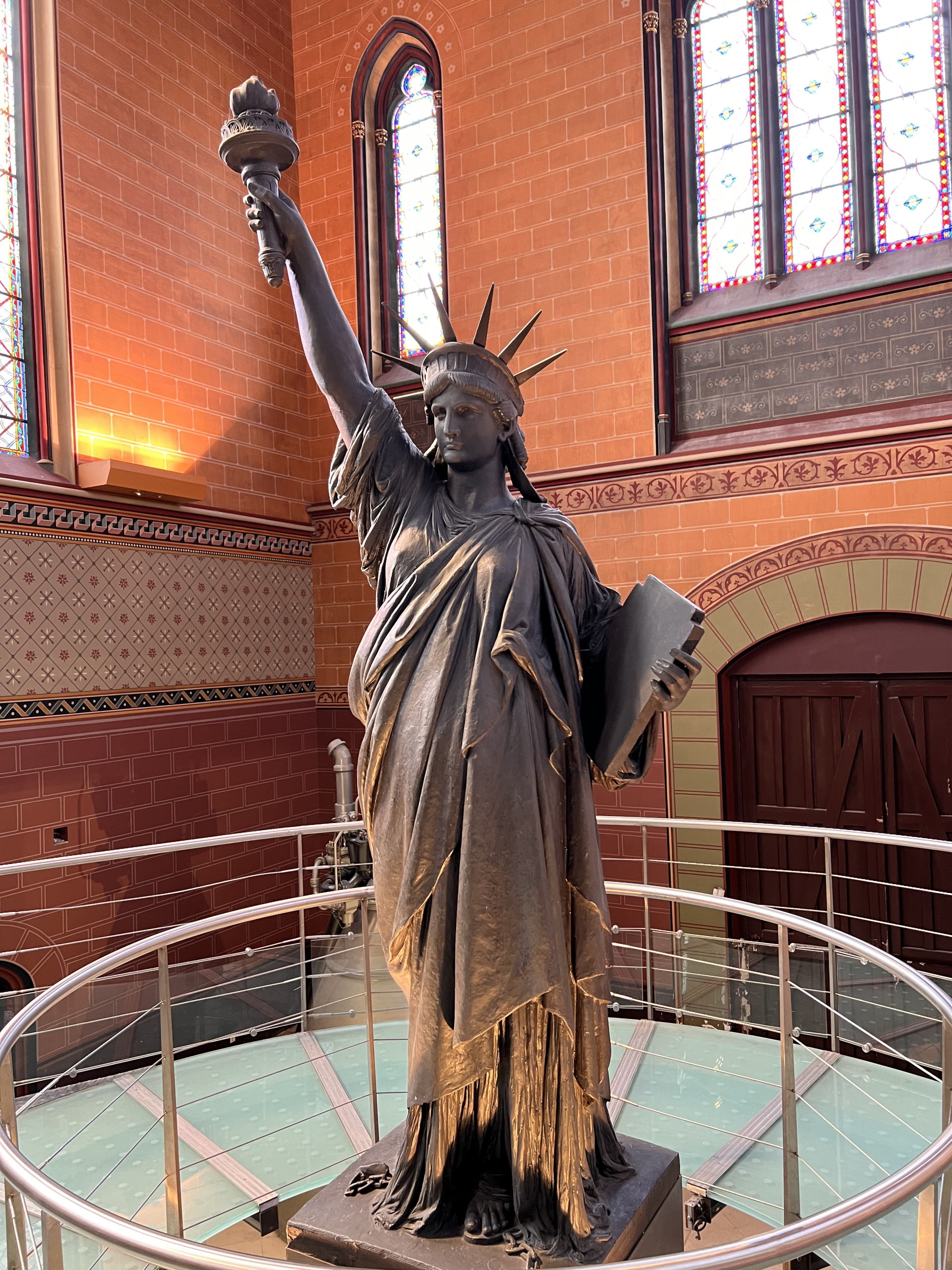
    At first glance, the idea that a company could claim human rights seems far-fetched. The French Declaration of the Rights of Man and the American Declaration of Independence deliberately refer only to men. For Enlightenment philosophy, it was clear that only humans, as individuals and rational beings, could be the holders of rights.

    However Article 19(3) of Germany’s constitution, the Grundgesetz, states otherwise:

    “Fundamental rights also apply to domestic legal entities, insofar as they are applicable to them by their very nature.” (Art. 19(3), Grundgesetz)

    In this regard, the Federal Court of Justice (BGH) states:

    “As a manifestation of the general right of personality, the corporate right of personality protects the […] social claim to recognition of corporations as commercial enterprises[.] An infringement of the right of personality is only unlawful if the interest of the affected company that warrants protection outweighs the legitimate interests of the other party.” (Federal Court of Justice, I ZR 217/15, 2017)

    If one seeks the historical roots of this perspective, one finds them in medieval canon law. At that time, individuals did not yet possess rights as of themselves – that was a concept of modern philosophy – but all rights flowed from divine sovereignty, mediated through the Church and the ruler appointed by God (through the Church). (We recall: “Paris is worth a Mass.” – Paris vaut bien une messe.)

    However, even back then there were institutions such as foundations, religious orders, hospitals, guilds and universities. The question facing the Council of Lyon in 1245 was this: do such institutions have enough personality to be excommunicated – that is, to be excluded from the salvation of God mediated by the Church – if they oppose the Pope? This resembles, a little, the question the Bahn is raising: whether it has the right to be offended as a person.

    The Council ruled at the time that a universitas – the technical term for such institutions – could not be excommunicated, because whilst it was a legal entity, it had no soul. Now, this says nothing about whether Deutsche Bahn or the ZDF have a soul, but in his comments on this decree, Pope Innocent IV codified two centuries of legal philosophy and distinguished between a societas, which consists solely of its members and possesses no rights of its own, and precisely that universitas, which is itself the bearer of rights.

    This distinction was important for the debate within the Church: it made it possible to safeguard the Church’s assets from the claims of bishops and parish priests and to preserve them for the future. This arrangement also meant that nuns and monks lived in legal poverty, even though their orders owned land.

    Modern capitalism, too, could not have existed without this distinction: the limited company is conceived in parallel to this universitas. These are legal constructs that can only be conceived because one regards an abstract entity as the bearer of rights, which takes precedence over the individuals acting on behalf of that abstract entity.

    The Dutch East India Company (VOC) was founded in 1602 and is regarded as the first publicly listed limited corporation in Western history. From the outset, it enjoyed far-reaching rights, including the right to establish overseas bases, build infrastructure and maintain its own army. Crucial to the development of the private sector was the idea that Innocent IV had already conceived: the members of such companies do not act in their own name, but in the name of their companies. Consequently, their personal liability is limited. The company becomes a legal entity in its own right.

    People were still very cautious about establishing such state-like corporations, but the invention of the railway and industrialisation required vast amounts of capital. And hardly anyone was prepared to put their personal assets on the line for the construction of a railway or even an iron ore mine. Consequently, more and more limited companies were permitted, and regulations were eventually relaxed entirely. Today, anyone can set up a limited liability company, regardless of the purpose. The only thing most companies are not allowed to do is set up armies. Not yet, at least.

    For in the 19th century, something happened that neither Innocent IV nor Johan van Oldenbarnevelt – the provincial advocate of the Province of Holland, who had played a decisive role in pushing through the establishment of the VOC – would have anticipated. The philosophy of modernity, according to which every individual is, in and of themselves, the bearer of rights, was extended to legal persons.

    In the United States, the rights to which companies were entitled were interpreted ever more broadly in the course of case law. After the Civil War, companies – led by the railways – claimed the 14th Amendment, ratified in 1868, for themselves; this amendment was actually intended to secure equal rights for freed slaves as citizens.

    One such case was the lawsuit brought by the Southern Pacific Railroad (1886), which was challenging tax increases imposed by a local county. The company sought a ruling from the Supreme Court that a corporation, too, possessed civil rights. In an opening statement, Justice Waite ruled that the question was not worth clarifying – it had already been settled:

    “The court does not wish to hear argument on the question whether the provision in the Fourteenth Amendment to the Constitution . . . applies to these corporations. We are all of the opinion that it does.” (Justice Waite, 1886)

    And since everyone shared this view, between 1868 and 1912 over 300 cases involving corporations were heard in relation to the 14th Amendment, but only 28 cases involving Black Americans. More recent history shows that these rights are constantly being extended. In the US, corporations have the right to free speech (Citizens United v. FEC, 2010) and the right to freedom of religion (Burwell v. Hobby Lobby, 2014). The right to free speech grants them extensive influence over the funding of political campaigns. – Some American scholars are already asking when they will be granted the right to bear arms.

    We live in a world in which the rights of corporations are treated in the same way as the rights of individuals. Looking at the historical development, one gets the slight impression that we have stumbled into this situation: a Pope’s notes on a conciliar decision, a statement by an American judge that this was not even a question, and finally Article 19(3) of the German Grundgesetz, for which there is no precedent in the Weimar Constitution and about which the minutes of the Parliamentary Council say very little.

    In contrast to the US, case law in Germany and France still follows the principle established by Innocent IV that a universitas has no soul. Consequently, French case law rejects the right to privacy for companies. And German case law refers only to Article 2 of the German Grundgesetz (liberty to act), not to Article 1, which protects human dignity.

    But the problem with all this is that human rights were originally formulated as the rights of individuals vis-à-vis the state (and the Church) as legal entities. If we now grant these rights back to legal entities, which can use them not only against one another but also against individuals, we risk jeopardising one of the great achievements of the modern age. – And by that I do not mean the railway.

  • Would we still plant a tree?

    Would we still plant a tree?

    Would we still plant a tree today if the world were to end tomorrow?

    There is a sense of doom and gloom in the air. The economy is struggling, so environmental efforts are being called into question. It is time to ask the philosophical question: would we still plant a tree today if the world were to end tomorrow?

    Nobel Prize-winning economist Paul Samuelson analysed this issue in 1976 in an article on sustainable forestry. He reports on management consultants who had concluded that planting trees was not worthwhile; indeed, to optimise returns, one would have to fell the trees before planting them.

    Ask forestry scientists about the maximum sustainable yield of a forest, and they will point to a specific moment for felling: the point at which a tree’s expected growth in the coming year falls below its average growth so far.

    From that moment on, a newly planted tree will produce more wood per year over its life cycle than the old tree would add in its next year of growth. Harvesting at that time maximises total timber yield over the long run.

    Economists, however, think differently. For them, biological growth is only part of the story. Opportunity costs—captured in the discount rate of an investment calculation—matter just as much.

    Following this logic, a tree should be felled as soon as its growth rate no longer exceeds the market interest rate. Since nature rarely outperforms capital markets, this reasoning implies that it would almost always have been better to fell the tree last year and invest the proceeds in a balanced ETF.

    That is the logic Samuelson attributes to these management consultants.

    This logic came to dominate economically driven forestry from the dawn of the modern era, when timber was needed for shipbuilding, through early industrialisation, when wood fuelled energy production and iron smelting. The result was predictable: vast forests in Europe and North America disappeared.

    Sustainability, on its own, was not profitable enough.

    This was economically rational then—and it remains so today. The ongoing destruction of primary forests is the empirical proof.

    At its core, the problem lies in how economics treats time. Something available today is valued more highly than the same thing available tomorrow. This reflects a simple fact: I will not live forever. As I might die tomorrow, income today is preferred to income tomorrow.

    Interest rates translate this intuition into mathematical models and produce a net present value (NPV). For very long-term investments—an oak tree takes two hundred years to mature—this NPV approaches zero.

    But impending death can also be interpreted differently. The closer it comes, the less relevant differences in interest rates become, because the effect of compound interest diminishes. Suddenly, even planting trees becomes worthwhile, as the gap between alternative returns narrows.

    Put differently: if we die tomorrow—or if the world ends tomorrow, which amounts to the same thing—opportunity costs fall to zero. There are no longer any alternatives to choose from.

    Put differently again: only if we will not see tomorrow—only if the world ends tomorrow—does it make economic sense to plant a tree today.

    We could die any day.
    So let’s plant trees.

  • Why business won’t save democracy

    Why business won’t save democracy

    Why business won’t save democracy

    Many European companies have spoken out in defence of democracy following the American president’s speech in Davos. They cite economic reasons. But the economic argument will not suffice.

    We all saw the American tech elite’s gestures of submission at the White House last autumn. We also remember that they and many other corporations have discontinued or reduced their diversity programmes; including European companies operating in the US. The same applies to climate targets.

    There is always great moral outrage, but the public debate ignores the fact that diversity and climate were only on the economic agenda because they paid off. Now the circumstances have changed, the calculations have been redone and the strategy adjusted. That’s how it works in business.

    And it has always worked this way: German industry had long opposed Hitler because it feared his customs policy. When he became Reich Chancellor in 1933, it changed its stance – and how: it donated 3 million Reichsmarks to his re-election campaign in March 1933. And immediately after the election, it organised the Adolf Hitler donation, which was intended for him personally.

    The German Nazi regime was not an isolated case: in many (Western) dictatorships, the business community worked brilliantly with the government: South Korea, Spain, Greece, Chile – to name but a few. And even today, business maintains excellent relationships with many other dictatorships: German exports to Saudi Arabia have grown twice as fast as those to France, Italy, Great Britain or Spain over the past 20 years. Exports to China have grown almost six times as fast.

    Companies follow economic logic. And economic logic is agnostic about human rights or environmental consequences as long as these are not translated into a framework for action by laws. The business of business is business.

    We assume that democracy and a prosperous economy belong together. However, this hypothesis still cannot be empirically proven with data. It has also only been widely held for about a generation. In 1989, Francis Fukuyama proclaimed the

    ‘end of history’ and outlined the state model of the future as a ‘liberal democracy […] with easy access to VCRs and stereos’. (Francis Fukuyama, 1989)

    As recently as 1960, Milton Friedman and the economic mainstream disagreed. For Friedman, democracy was not a prerequisite for prosperity; rather, economic freedom was the necessary condition for political freedom. Without capitalism, there can be no democracy.

    The founding fathers of economics were even more adamant in their belief that a democratic order was detrimental to economic development because it undermined the pursuit of prosperity: Adam Smith considered it the task of government to protect the property of the wealthy from the poor. And in the mid-19th century, French economist François Guizot declared that universal suffrage would lead to the poor expropriating the rich. Vilfredo Pareto was also convinced:

    ‘[Democracy] digs its own grave and destroys what it brought into being.’ (Vilfredo Pareto)

    In the United States and parts of Europe, such voices are becoming louder again. There are fears of falling behind in the ‘system competition’ with China. We can’t afford Democracy no longer, it is said.

    Another argument

    Liberal society is about the protection of minorities, freedom of the press and the arts, freedom of religion, protection of privacy, control of state action by the people, preservation of human dignity – if all of this is measured against the question of whether it leads to greater prosperity, then we are surrendering liberalism to economic arguments. And then it is up for grabs as soon as it is no longer worthwhile.

    A liberal society protects the individual from the state. That is the classic argument. It stems from a time when the state was represented by powerful monarchs. Translated into our times: a liberal society protects the individual from the arbitrariness of the powerful, even if they can organise a majority.

    Or even more pronounced: Liberal society protects the weak. It protects those who are not worth standing up for; those who are of no use. It does so because doing so is liberal, not because it pays off.

  • At the limits of the West

    At the limits of the West

    At the limits of the West

    ‘A Spirit of Dialogue’ – That was this year’s motto for the World Economic Forum. Genuine dialogue in the Socratic sense, where one can learn something, present one’s insights and doubts, and listen to the arguments of others, is not in good shape at the moment. So it was probably right to invoke the spirit of dialogue instead. – Though, was it?

    “Despite all the frustration and anger of recent months, let us not be too quick to write off the transatlantic partnership. […] No, we Europeans, we Germans, know how precious the trust on which NATO is based is. In this age of great powers, the US will also depend on this trust. It is their and our decisive competitive advantage.” (German Chancellor Merz, Davos 2026)

    This was the German Chancellor’s pledge. Strictly following Adam Smith, he did not appeal to the goodwill of the Americans, but to their self-interest. He spoke as an economically minded person, as someone who relies on reason and the power of better arguments. Towards the end of his speech, he once again invoked the spirit of the Enlightenment:

    “Let us be inspired by what is perhaps the most important lesson of enlightenment: our fate is in our hands. It is our responsibility and our freedom to shape it.” (German Chancellor Merz, Davos 2026)

    For those who are not familiar with those spirits, the French President explained the core idea of the Enlightenment once again for simple minds:

    “But we do prefer respect to bullies. We do prefer science to conspiracy theories, and we do prefer the rule of law to brutality.” (Emmanuel Macron, Davos 2026)

    This was widely perceived as a courageous statement – reinforced by the sunglasses – but anyone who reads Macron’s speech understands that the reference to our values was ultimately little more than an argument for investing in Europe: here there is stability, here there is reliability. Macron appealed to the self-interest of global companies.

    Both speeches evoked the spirit of dialogue, the spirit of enlightenment that has been whispering to us for over 200 years: you can afford to be a decent person, it will pay off. So far, it has always worked out well. To quote Canadian Prime Minister Carney: ‘The fiction was useful.’

    No one had yet asked the crucial question: But what if it no longer pays off? Will we then stop being decent? The answer could be painful. For dignity has no price. According to the great philosophers of the Enlightenment, it is not subject to the regime of utility maximisation. Dignity is, to quote the German Constitution, ‘inviolable’. The value of human beings is not measured by what they contribute. Our common foundation is not prosperity.

    The American president, on the other hand, believes that people are different in value and that their value is reflected in the extent to which they can prevail:

    “Many of you in this room are true pioneers. You’re truly brilliant, brilliant people. Just your ability to get a ticket is brilliant, because you have about 50 people for every seat.” (Donald Trump, Davos 2026)

    His entire speech exuded that striving for dominance, that regaining of strength, that assertiveness and that contempt for the weak.

    It was therefore no coincidence that the Canadian Prime Minister began his speech in French. French is not Carney’s mother tongue; it is the mother tongue of a minority of around 25% of Canadians. Carney thus paid tribute to those who depend on the majority to show consideration. He put himself in the shoes of those who struggle to make themselves heard in the chorus of the strong, who struggle to be understood by the assembled elite. Carney bore witness to the diversity of the human community even before he had said anything substantive. In doing so, he set himself apart from the rhetoric of the American President in style, content and language.

    French is also the language of the revolution against authoritarian regimes, the language of the Enlightenment, the language in which human rights were first formally declared and written down, those human rights that protect the weak from the strong. Americans may have forgotten, but it was French soldiers who supported them in their War of Independence against the British Crown. In this language, Carney reminded the weak:

    “La puissance des moins puissants commence par l’honnêteté.” – “The power of the less powerful begins with honesty.” (Mark Carney, Davos 2026)

    The Canadian Prime Minister compared the current situation of the international order with the communism of the 1970s described by Vaclav Havel in his essay The Power of the Powerless. Everyone put communist slogans in their shop windows, but no one believed in them. The system only survived because no one was honest.

    It worked for a long time. According to Carney, occasionally, the hegemon was allowed to break the rules because we all benefited from free sea lanes, a stable financial system, common security and international agreements. That has now changed. However, honesty not only requires a clear description of the situation, it also requires consistent action:

    “Apply the same standards to allies and rivals. When middle powers criticise economic intimidation from one direction but stay silent when it comes from another, we are keeping the sign in the window.” (Mark Carney, Davos 2026)

    Carney called on states and companies to take the signs out of the window. He called on the assembled elite to stand by their values and enter into (pragmatic) cooperation based on these values, instead of gathering in strongholds around a hegemon.

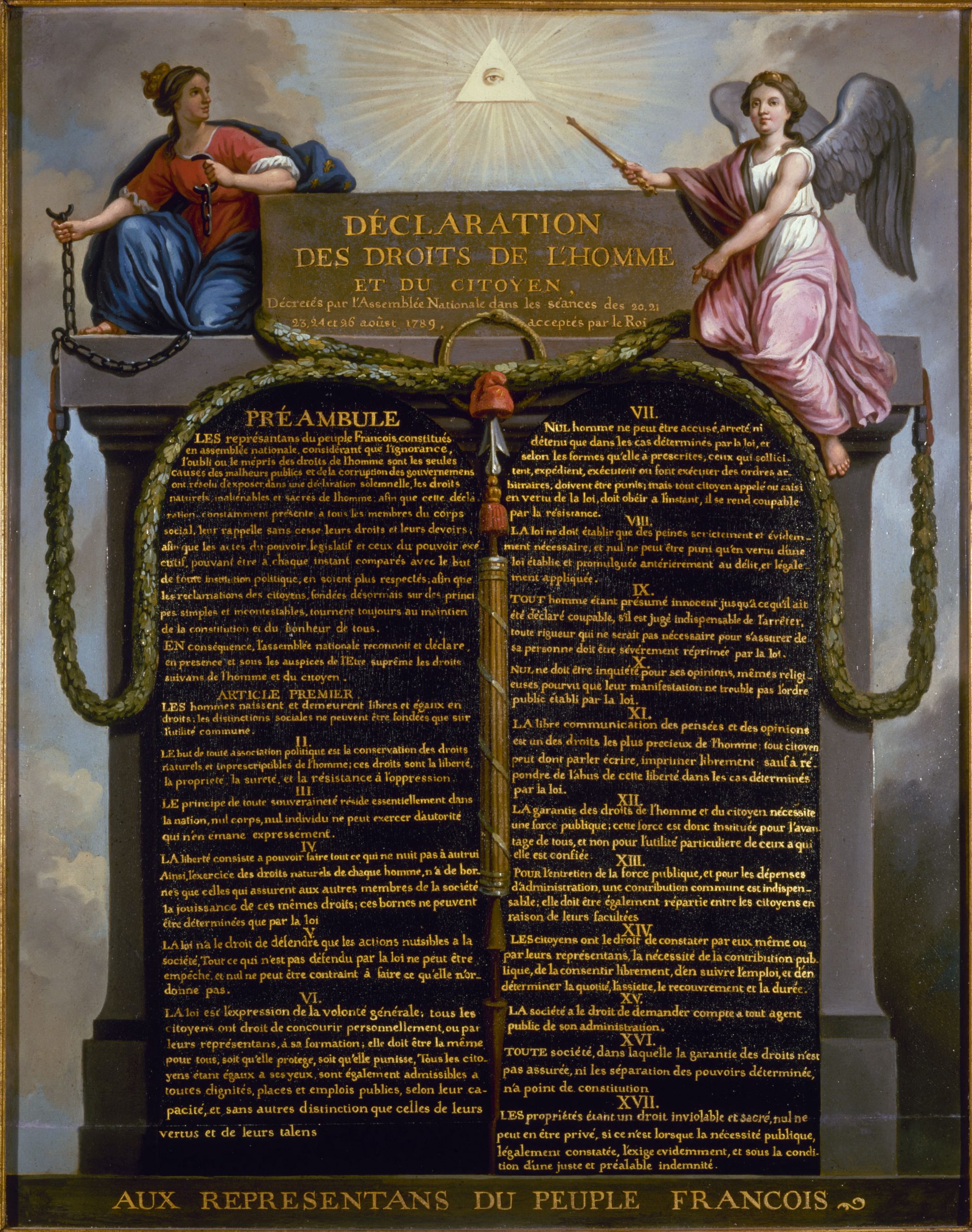
    In doing so, he emphasised the idealistic character of the community that calls itself the ‘West’, which the US President also invoked so often in his speech. But contrary to what Trump believes, the ‘West’ is not a geography, a culture, an ethnicity, a skin colour, nor a business or economic model. The ‘West’ is the fundamental conviction that human dignity is not measured by utility. It is the conviction that the powerful cannot do whatever they want, as laid down in the French Declaration of the Rights of Man of 1789:

    Les hommes naissent et demeurent libres et égaux en droits. (Art. 1)
    La liberté consiste à pouvoir faire tout ce qui ne nuit pas à autrui. (Art. 4)

    All men are born and remain free and equal in rights. (Art. 1)
    Freedom consists in being able to do anything that does not harm another. (Art. 4)

    For those who struggle with French, there is also an old English-language document:

    “We hold these truths to be self-evident, that all men are created equal, that they are endowed by their Creator with certain unalienable Rights, that among these are Life, Liberty and the pursuit of Happiness.” (US Declaration of Independence, 1776)