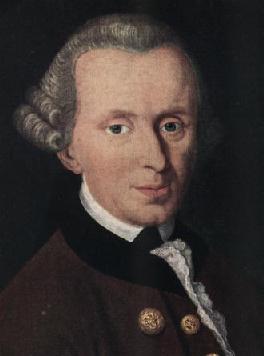
“In the kingdom of ends everything has either a price or a dignity.”
Immanuel Kant, Groundwork of the Metaphysics of Morals, 1785 (AA IV 434)
What Prices Tell Us About Ourselves
Being schooled into homo oeconomicus
7.7 billion litres of cola and other soft drinks are produced in Germany every year. From next summer, they will carry an additional tax of up to 38 cents per litre. About eight times as much petrol and diesel is filled up in Germany every year. Every litre of that currently enjoys a tax break of around 17 cents through the Tankrabatt, the fuel tax rebate. – According to Niklas Luhmann, prices are information through which the economic system reaches an understanding with itself and about itself. So what is politics trying to tell us when it raises one price and lowers the other?
Three theories
Theory number 1: Rising prices are scarcity signals. – According to Luhmann, however, they represent only scarcity on markets, not necessarily real scarcity. A look at the world situation nevertheless shows that fuel is also really scarce; sugar, too, is probably becoming scarcer this year because of poor harvests. – Yet the state amplifies one price signal and dampens the other.
Theory number 2: Taxes serve to finance the state. – The budgets of the Länder and the federal budget are both under pressure. Depending on one’s economic or political position, one can raise taxes to consolidate the budgets, or lower taxes to stimulate growth and thereby consolidate the budgets. The state does both at the same time.
Theory number 3: Prices have an incentive effect. – When something becomes more expensive, less of it is consumed, because individual cost-benefit calculations shift. If that were so, the state would have an interest in less sugar but more petrol and diesel being consumed. – That holds for sugar, because excessive sugar consumption causes health damage that costs the health system a great deal of money. But it does not hold for diesel and petrol, because the transport sector would have to reduce CO2 faster so that Germany as a whole can meet its international obligations.
The logic of self-interest
At first glance, there seems to be no logic behind it. The public mostly contents itself with discussing particular interests. Sometimes it points to the inconsistency of politics. But could it be that this behaviour is not so inconsistent after all? Could it be that behind it lies a rationality that has long since impregnated all of us, but which we are reluctant to face?
It is the egoistic perspective of the individual utility maximiser, that straw man of homo oeconomicus who (supposedly) does not exist in reality, that explains political action: The dearer cola hurts one’s own wallet, but it also benefits one’s own health. The benefit to the health system is a collateral benefit that we accept because we get something out of it too. Presumably, that is why a majority in surveys supports it. – Dearer petrol, by contrast, would hurt one’s own wallet and benefit only future generations. That is why in June more than 60% of Germans were still in favour of extending the Tankrabatt.
The other kind of person
There is research showing that human beings are not egoistic utility maximisers. Philosophers, psychologists and economists have shown that people can act differently, and want to act differently, from optimising themselves always and everywhere. A famous empirical study from 1997 on the acceptance of a nuclear waste repository beneath a Swiss village showed that approval fell when the residents were offered money. Some things simply cannot be paid for.
For the political system, we would need this other kind of person. Living together in a community demands compromises and sometimes personal “sacrifices”. There is no social equilibrium if everyone insists on optimising their own utility function. Amartya Sen already objected to this in 1977, arguing that a society that relies only on personal advantage cannot function.
Smith and Kant
Adam Smith did advise us not to rely on the baker’s benevolence when we buy our bread, but he also knew that this behaviour does not exhaust what it means to be human:
“And hence it is, that to feel much for others and little for ourselves, that to restrain our selfish, and to indulge our benevolent affections, constitutes the perfection of human nature.” (Adam Smith, The Theory of Moral Sentiments, 1759, I.i.5.5)
Immanuel Kant, too, distinguishes between the pragmatic law, which addresses the human being as someone who seeks their own happiness and optimises their benefit, and the moral law, which addresses them as a rational being and affirms their dignity. It is the setting aside of one’s own benefit that makes the human being a human being. It is their awareness of being able to commit themselves to a higher cause that gives them dignity. – That distinguishes economically rational action from law, which according to Kant is to be founded on the law of freedom: Law applies unconditionally, whether I want it or not; the price applies depending on my ability or willingness to pay. Before the law all are equal; before the price they are not.
The price as a political instrument
Now, the state has long intervened in the economic system with taxes and levies in order to put a price on so-called externalities. In 1920, the British economist Pigou proposed using the price so that those who cause harm bear the damage they inflict on others. (Pigou 1920; Edenhofer/Franks/Kalkuhl 2021) Politics and law nevertheless went on for decades to work with bans, limits and standards, and even in Germany price signals long counted as hardly feasible politically. Only since the early 1990s, when Finland and Sweden introduced the first CO2 taxes, has the price become a political instrument. Starting from Gary Becker’s rational choice theory, the idea of incentives begins to spread. In 2003, Richard Thaler and Cass Sunstein proposed steering people through the design of their choice situation so that they themselves end up better off. From this develops the idea of “nudging”, of gentle pushes. The sugar tax goes one step further, it changes the price. Yet the price is no longer merely a means of internalising externalities and protecting others from me. The price becomes an instrument for protecting me from myself.
One resorts to the price because it is perceived as less restrictive of freedom than a ban. But prices address, after all, the economically rational or pragmatically acting part of the human being, not the part oriented towards the common good. If politics increasingly communicates through prices instead of seeking democratic discourse, it ends up promoting a society whose interaction resembles market behaviour more than democratic coexistence. That people in such an environment also come to see the state only as a supplier of citizen benefits, and are bound to be disappointed, should surprise no one.
Why We Need to Rethink the Relationship Between the Generations
Lecture at the symposium Fewer – Older – More Diverse. Opportunities and Challenges for Our Society of the Karlsruher Forum für Kultur, Recht und Technik e. V. (Karlsruhe Forum for Culture, Law and Technology)
Karlsruhe, 14.10.2026
“You should have it better one day”
I remember this sentence of my grandparents well. They said it to us often, to my two brothers and me.
My grandparents were not philosophers; they were simple people. But this sentence had a philosophical depth. It could be declined on three levels:
Never again war. For: “Peace is not everything, but without peace everything is nothing.” – I do not know whether my grandmother was consciously quoting Willy Brandt, but it is from her that I often heard this sentence. My grandparents did not say much about the war. And even less about the crimes against which they and their parents had put up far too little resistance. They were 13 when Hitler took power. – But when they did talk, you could see the shock in their faces. And it was clear: anything is better than war.
Education and openness to the world. They kept our parents’ backs free and looked after us children, so that my mother could work and we could sit our Abitur. And they showed us their world, took us to Paris and to London. They themselves even travelled to Moscow. In the middle of the Cold War.
Passing on modest prosperity. It was not about their prosperity, it was about building up ours. They put aside part of their pension, which was not large, for us children: for the driving licence and for university. – “You can’t take anything with you in the end,” my grandmother would say to me now and then, whenever she slipped me another twenty-mark note for the weekend with friends.
“You should have it better one day!” – The future was the promise made to us, and the stake they put up for us children.
The sentence “Things used to be better” never crossed their lips. For the brother had fallen in the war, one brother-in-law had been severely wounded, and the other brother-in-law had been driven from his homeland after the war.
The past was no competition for the future. The past was the old, the future the new that dawned with the young generation.
Things used to be better
“Things used to be better” – this sentence is probably as old as humankind. It is a sentence of the older, for the younger do not know this past of which people speak and which is supposed to have been better than the present. “Even the future is no longer what it used to be.” In Germany this sentence is attributed to Karl Valentin, in France to Paul Valéry. Probably it is older still.
Things used to be better – that is an attitude shared, according to a survey by Infratest dimap from February 2026, by 52 per cent of Germans. The reference point was the 1980s. Among supporters of the AfD it is 68 per cent, of the Union parties (CDU/CSU) 55, of the SPD 47, of the Left Party and the Greens about a third. – At first that is no surprise: conservatives have a more positive image of the past.
A comparison of the age groups shows a clear generational difference: among respondents aged 50 and over, more than 60 per cent rate the Federal Republic of the 1980s as better. Among those under 50, who for the most part did not experience that time actively themselves, agreement is lower, but still astonishingly high: in the age group from 35 to 49 it is 44 per cent, among 18- to 34-year-olds still 33 per cent. One in three, then, who did not live through that time at all.
But that leaves out a great deal: it was not better!
It was not better in the past: not geopolitically. Not economically. And socially least of all.
Geopolitically: Let us begin with the fact that almost 17 million Germans had to live in a dictatorship with a shoot-to-kill order at the border. The Cold War, the rearmament, Pershing missiles on German soil, hundreds of thousands in Bonn’s Hofgarten because they feared a nuclear war in Europe. The Soviet Union had invaded Afghanistan, the war between Iran and Iraq raged. The First Intifada broke out. The IRA was murdering in Northern Ireland and ETA in Spain.
Economically, in the wake of the oil crisis we had inflation rates averaging 5 per cent between 1970 and 1980. Domestic demand was saturated, new technologies (robotics, microelectronics and so on) moved into factories and offices – the economy grew only slowly, unemployment rose, as did public debt. The Social-Liberal coalition broke apart over the question of economic policy.
Socially, there were violent confrontations between the state and its citizens. Not only did the enforcement of the Startbahn West runway at Frankfurt Airport claim lives; the scenes at the construction sites of the nuclear industry, too, were compared by the press to conditions of civil war. Violence in marriage and against children was tolerated. Rape within marriage was not a criminal offence until 1997. As late as the end of 1978, the Bavarian Supreme State Court confirmed a “right of corporal punishment under customary law” for teachers in the classroom.
Migration, too, the supposed “mother of all problems”, has always existed: over 10 million refugees from the former German eastern territories after the war – in Baden the population demonstrated against the settlement of the expellees; millions of labour migrants from southern Europe and Turkey in the years of the economic miracle; millions of ethnic German resettlers and refugees in the wake of the dissolution of the Warsaw Pact. When right-wing extremists openly hunted foreigners in Hoyerswerda, Rostock, Mölln and Solingen in the 1990s, the state was helpless.
If one asks Germans why they nevertheless regard the 1980s as a better time, they name the quality of roads and bridges, the state of Deutsche Bahn, and upward mobility through education.
The last two points stem from a distorted perception. The Bundesbahn was chronically in deficit. The burden on the state budget from the railways in West Germany already stood at DM 8.8 billion in 1980. The carriages of regional services were chronically outdated; and staff was lacking everywhere.
And as for education: of those born in the mid-1960s, eight out of ten still earned more than their parents. Of those born in the mid-1980s, it is six out of ten. In 1983, BAföG (the federal student aid) was converted to full loans, and the number of recipients fell. – Our problems with education began back then.
And quite honestly: better roads and bridges – that is the remake of the old story: “But he also built the motorways.”
It was not better.
The transformation of society
Now, this feeling that things used to be better does not come out of nowhere. It has its causes in a structural change of society:
Old people live more in the past; and old people are becoming more numerous
A different economic structure and slower growth
The division of social realities
There are more old people
Whoever is old seeks stability and security. That is not true of every individual, but it is true in sum. And when the majority grows older, a society’s readiness for change declines, not because the individual changes, but because the weights shift.
In 1980 there were 12 million people aged 65 and over for 21 million children and young people. Around 2006 the two groups were equal in size. In 2045 there will be about 22 million older people and 13 million young. The ratio between old and young will have been reversed.
Of ten people who need someone to look after them, that is, children under 18 and people over 80, one was old in 1980. Today it is three; in 2050 it will be four. Where society used to care mainly for its young, it now cares more and more for its old. It no longer cares for its future, but for its past.
A different economic structure and slower growth
Age shifts the activity of the economic sectors: the workforce in the health and social sector in Germany as a whole rose from 3.1 million people in 1991 to almost 6.6 million today. – 14 per cent of those in employment look after health and social care in one form or another. One in seven. We often lament the shortage of doctors, yet in 1990 there was one doctor for every 335 inhabitants. Today it is one for every 187. – That is almost twice as many doctors.
A society that expands creates opportunities for new growth: new industrial areas, new roads, new ports. – Today we repair this infrastructure. This money creates no new growth, it secures what exists.
Together with the ageing of the population, this slows the growth potential of the economy as a whole. Care is less productive than industry. In addition, older people invest less than young families.
A division of social realities
Ageing does not proceed uniformly across Germany: for every ten Hamburgers aged 20 to 64 there are just under 3 people aged 65 or older. In Saxony-Anhalt it is over 5. Baden-Württemberg, at just under 4, lies in between.
Urban centres and regions with good educational provision remain attractive and draw in young people. In the long run this leads to a structural collapse of provision in rural areas, with doctors and pharmacists probably the last to leave. For there is work for them. The first to close are the schools, since too few children are left to make up classes. In many rural regions it is also hard to put together a football team. That is why families and young people move away. Businesses find no successors and close. Supermarkets, electricians, plumbers, car repair shops are missing. Flats and houses stand empty. Infrastructure costs are spread over fewer households. Life becomes more expensive.
In the face of these challenges and these individual experiences, social consciousness changes, and not only among individuals but across the board. A society that looked forward to the future becomes a society that grows weary of the future and takes refuge in the past. The future grows old.
“Being determines consciousness”
The sentence is from Marx. – With it, Marx turned against the philosophy of German Idealism, which believed it could describe reality through the analysis of consciousness.
“Social consciousness”, if there is such a thing, reacts to this structural transformation with three mechanisms of repression, if you like:
The transfiguring glance back and the nostalgic flight into the past
Withdrawal into the private sphere
And: the assertion of claims in the name of a justice for those who, really or supposedly, come off short
The transfiguring glance back
No matter how often I say that it is not true. No matter how many statistics, facts and analyses we trot out. The feeling that things used to be better does not go away. It does not go away because, individually, it of course was better. We were all younger, the world lay open to us. We had plans. We were young, fit and beautiful. – I liked being young. And I remember a gleam in my grandmother’s eyes when she talked about her youth. When she was 20, the Second World War was raging, her brother was at the front. And yet her eyes shone when she told of that time.
In addition, the progress of the 1970s and 1980s in particular was publicly visible progress. New roads were built, new schools, sports halls, swimming pools, libraries. New housing estates were developed. Young families moved into new houses. The railway developed the ICE, cars became safer, technical environmental protection made enormous strides. In the 1960s the Rhine still changed colour regularly. There were hardly any sewage treatment plants. In Frankfurt and Munich the refuse dumps burned regularly.
From the 2000s on, progress became increasingly invisible. The iPhone has existed since 2007. The first Tesla came onto the market in 2008. After that, it feels, not much more came. – For medical progress, progress in production methods, resource efficiency, the optimisation of processors, all of that one does not see. There are no ribbons to cut. – And the little visible progress there is (wind turbines, heat pumps, electric cars) is dragged into a culture war.
Finally there is the culture industry, which lives quite well on nostalgia: television has lost the young generation and now broadcasts the TV of the 1980s and 1990s: “Verstehen Sie Spaß?” and “Wer wird Millionär?” (the German version of “Who Wants to Be a Millionaire?”). – The programmes of the radio stations live on the music of that time. And even documentaries and museums are discovering the recent past as a focus. – Why? Because it sells. Even my son listens to my music, and he is not alone in that.
Withdrawal into the private sphere
While nostalgia is above all a phenomenon of the older generations, withdrawal into the private sphere is a consequence for all generations, albeit from different motives. Among the older we are dealing with a mixture of a mistaken notion of “making room” (now it is the young people’s turn, I don’t want to stand in the way), a certain egoism that is even cheerfully professed on car stickers (“Travel before you’re dead – or your heirs will go instead”), and a social discourse that strips the old of their autonomy. They become objects of welfare-state provision and are offered housing advice, nutritional advice, sporting activation and so on, whether they want it or not.
The active generation withdraws because it is overburdened. Two earners in a household, which still does not suffice to build a house of one’s own, because land and ancillary costs have become so expensive and because society’s expectations of holidays and household equipment have grown. In the generation of those over 60 today, the woman kept family life going. That left room for her own voluntary engagement and for her husband’s. – With two jobs and no grandparents in the vicinity, that is no longer possible.
And finally, the young have the feeling that engagement does not pay off. They experience always being in the minority. And they experience meeting with scarcity everywhere: too few teachers, too few coaches, too little of everything. It is no longer normal to be able to play football or learn an instrument.
Insisting on justice and on one’s own claims
Where the cake no longer grows, the securing of one’s own claims begins. Public debate no longer approaches the big questions of society from a vision of the future, but from the claims and particular interests of individual groups. That makes common solutions all but impossible, because although claims are formulated, it remains unclear how they are to be paid for, or whose claims are not to be met.
And there are many claims:
The claim of the 64.5-year-old to a pension without deductions
The claim of the hard-working, of whom no more can be asked
The claim of the young to an affordable flat and a free nursery place
Whoever lodges a claim is always also saying: someone else must pay or go without. The left side of the political spectrum likes to look to the wealthy at this point. They should contribute more, so that social insurance, the renovation backlog of the infrastructure, better education and equipment for the armed forces can be paid for. – The Left Party’s wealth-tax proposal is supposed to raise about 150 billion euros. The conservatives like to call for cuts in social spending, but even the complete abolition of the Bürgergeld (the basic income support for jobseekers) would bring in only just under 50 billion. The state, however, has total expenditure of 2.3 trillion euros. The lion’s share of that still has to be paid by all of us. – The claims cannot be shifted onto supposed marginal groups such as the “super-rich” or the “total shirkers”.
The previous “relationship” between the generations – the definition of claims and needs
The previous relationship between the generations is often defined as a relationship of entitlements. On the one hand there are the social security systems; but there is also the question of what an age-appropriate life can look like and what the state or society can or should provide for it.
I shall spare myself the many discussions about the social security systems, and only want to point out that looking at the pension system is not enough. There are model calculations showing that the rise in contribution rates in health insurance is to a predominant extent attributable to the ageing of the population. In long-term care that is undisputed.
More worth pondering, it seems to me, is the growing importance of a once incidental and subordinate paragraph of the SGB XII (Book XII of the Social Code).
In 1961, with the Federal Social Assistance Act, it was recognised that old age, too, can create a need for assistance of its own. Assistance for the elderly was a small part of social assistance; since 2005 it has stood as § 71 in the SGB XII. That is to say, where it concerns people who cannot help themselves by their own means. Whoever looks at old age in this way creates structures that make old people, per se, people in need.
“Assistance for the elderly is to help prevent, overcome or alleviate difficulties arising from old age, and to preserve for old people the opportunity to take part in community life in a self-determined way and to strengthen their capacity for self-help.”
And indeed more and more organisations and offers of help relating to growing old are springing up, invoking this paragraph. They create their own demand. From the federal level to the municipality, from associations to consultancies, everyone is now concerned with the question of how to grow old well.
The German Association for Public and Private Welfare (Deutscher Verein für öffentliche und private Fürsorge), the professional association of municipalities, states and welfare organisations, has, with funding from the Federal Ministry for Family Affairs, commissioned a situation report comparing the services of the municipalities and federal states under this paragraph. It is the starting point for the fact that more will now be demanded throughout the land.
This report, produced by a management consultancy, lists 13 advisory services under the five themes the law itself names: civic engagement, finding and keeping a home, everything to do with care, using age-appropriate services, and finally sociability, entertainment, education and culture. A great deal of money flows into lunch clubs, neighbourhood processes and project posts. It is hardly possible any longer to keep track.
By now an Elderly Assistance Act of its own is even being demanded; the state of Berlin passed one at state level this summer. A small part of social assistance is to become the counterpart to the Child and Youth Services Act.
What, then, has changed in the situation of the old, compared with the glorious 1980s, that they now need a law of their own? Is the individual old person suddenly more in need of help than before? Hardly. The economic and nursing needs are covered elsewhere.
The whole thing is philosophically questionable for three reasons:
These structures are financed by the active, who do not have comparable help; and the old of today, when they were active, did not finance such structures for the old of their day either. So we are redistributing from young to old, from the future to the past.
Many old people need no state support. Nevertheless, advice and support under § 71 are to be provided “regardless of existing income or assets”. That violates the principle of subsidiarity.
And perhaps the most telling argument: we strip people of their autonomy from their mid-60s on when we declare them en bloc to be the addressees of assistance for the elderly. Youth services are meant to lead to independence; they make themselves superfluous. Assistance for the elderly is meant, to be sure, to preserve independence, but it tends to grow as people grow older.
But what is just, then?
This is the question of philosophy since its beginnings. What is just? – Many claims argue from commutative justice: “We paid in.” “We worked for a long time.” I have achieved something and now want compensation for it. Even Aristotle found it hard to find the right measure for this, valid for all time.
I would therefore like to put the question differently. For in this form the question of justice arises only if I regard society as a society of exchange. That, to be sure, corresponds to the ideology of our time, but before the exchange comes the willingness of one party to go first, to give in advance; the willingness to give something at the risk of getting nothing back. The core question that holds society together is not the question of justice, but the question: Who is prepared to give? Who is prepared to take on responsibility?
Between the generations the idea of exchange does not work anyway: do the young owe the old something? Nobody was asked whether he wanted to be born. Gratitude may arise from this, but not a debt that can be enforced. The generational contract is not a contract that anyone has signed; its terms must constantly be renegotiated. And it is not a contract of exchange. What could the old generation have to offer the young in exchange?
And the other way round? Whoever brings a child into the world is responsible for it, for a lifetime. That is the real generational contract: what we received from our parents we can never pay back. We can only pass it on. That, too, is not an exchange. It is a gift that is given forward. It is a gift that founds the future.
The social, the idea that the other is a socius, a companion, and not an enemy, opponent or competitor, this idea does not start from a community of exchange among equals with equal rights, but from the willingness to give without getting anything back. In this lies the responsibility of the strong for the weak, of those who have for those who have nothing.
And here it now gets interesting. For many old people are strong. They are wealthier than the young: in every percentile, people between 65 and 74 have markedly more wealth than people between 35 and 45 – from poor to rich; on average more than twice as much; every year 400 billion euros are inherited in Germany, and the typical heir is in his mid-50s or older. Wealth is being shifted from the very old to the not-quite-so-old.
Older people in Germany largely no longer have to work. Someone who could formerly live off his wealth was called a rentier. He was considered rich. Also because he could dispose freely of his time. Added to that are knowledge, competence and experience. There is a great deal of strength there.
Moreover, our generation has not exactly had a positive influence on many things that make the lives of our children harder: climate change first of all, the broken infrastructure and an education system that leaves too many behind and by now also produces poor results across the board.
From this derives a special responsibility, one that the old generation always knew about and which found expression in the sentence “You should have it better one day” – The old of former times knew that one is never rid of one’s responsibility for one’s children.
For this, however, it would be necessary for the old to break with this new retro consciousness of society: they know from their own experience that things were not better in the past. They would have the time to get involved. And they would have the freedom to formulate a claim, not on others, but on themselves – for the young: “You should have it better one day…”
Perhaps one can make this sentence a kind of touchstone for the individual and political decisions that are now pending: does the retention of the pension without deductions after 45 years of contributions stand up to this standard? Does inaction in education policy stand up to it? Does the abolition of the heating law and of the ban on combustion engines stand up to it?
The French philosopher Emmanuel Levinas once said that responsibility consists in acting for a “time without me” and in renouncing being a contemporary of the triumph of one’s work.
In the mid-1980s my grandfather had the heating in my grandparents’ small owner-occupied flat replaced once more. He was 65 then and, statistically, had a little more than 12 years left to live. He did not do it for himself.
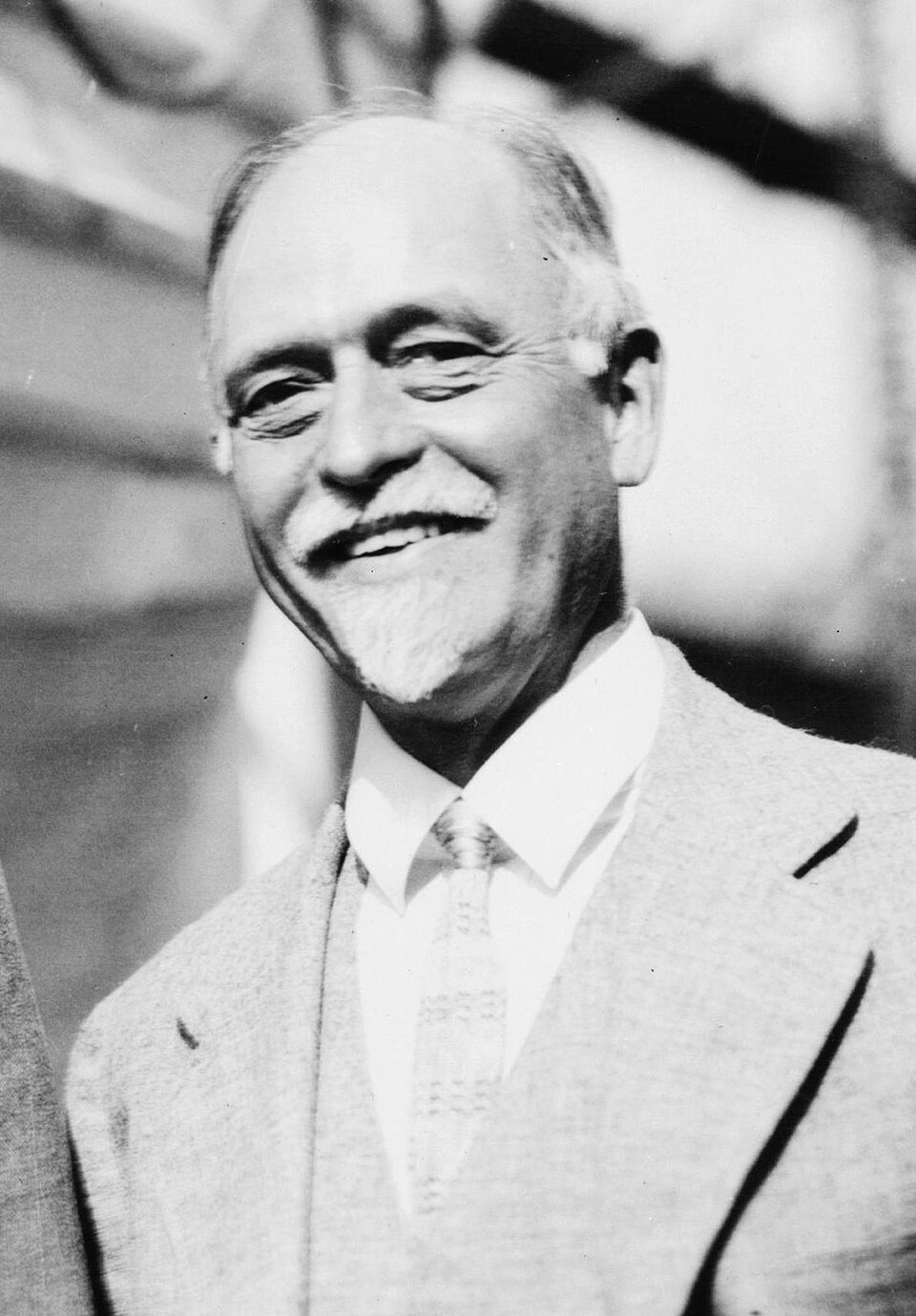
“Anyone who values his life would prefer to rob the future for the benefit of the present so far, at least, as to keep life going.”
Irving Fisher, The Theory of Interest, 1930
Impatient — with interest
What is left to believe in?
$40 trillion in public debt, a budget deficit near 6 percent of GDP, and the yield on long-term government bonds at a 25-year high. Most experts cite uncertainty as the decisive reason for the latter, and some are warning of a new financial crisis. The US Treasury Secretary, meanwhile, has chosen to speculate: he is buying back long-term bonds with short-term ones. In doing so, he is effectively testing the hypothesis that interest is a purely monetary, and therefore virtual, phenomenon. It may be worth looking instead at the arguments of Irving Fisher, who very nearly a century ago put forward what remains the most influential theory of interest. For him, interest was a real phenomenon, grounded in human impatience.
Interest as a real phenomenon
In his book, still worth reading today, The Theory of Interest: As Determined by Impatience to Spend Income and Opportunity to Invest It (1930), Fisher argued that our willingness to invest money — to trade present income for future income — depends on four factors: the size of that future income stream (which implicitly includes the rate of return), its distribution over time, its composition, and its uncertainty. The sooner we receive the income, and the more certain it is, the lower the future income needs to be relative to the present. The market, he held, brings these factors together with individual preferences and sets the market rate of interest for different investments.
Impatience and mortality
Fisher traced our demand for interest itself back to human impatience. We would rather consume and enjoy today than tomorrow. When our life itself is at stake, he argued, we are even willing to gamble away the entire future. This may be why the Church, for centuries, forbade the taking of interest altogether. To the Church, impatience was a sin — the sin of placing one’s own timing above God’s. “Whoever is patient has great understanding, but one who is quick-tempered displays folly” (Proverbs 14:29). To this day, patience is considered a virtue. No wonder we so desperately want to teach it to our children.
But for those who do not believe in eternal life — which is the founding hypothesis of our secular world — patience is a difficult business. Because death is always possible, they risk losing their invested money at any moment, without any return at all. That is why we value the present over the future: “Never put off till tomorrow what you can do today.” Or, as today’s shorthand has it: FOMO — the fear of missing out. Impatience is a sign of our mortality. And interest is the price we pay for it.
Credit comes from credere
If overall interest claims rise, then, on this reading, we are becoming more impatient. In a crisis, though, it is not our relationship to death that changes, but our relationship to our belief system. It is no accident that credit comes from the Latin credere — to believe.
In the last financial crisis, we lost faith in the value of mortgage debt — long considered one of the most secure investments there was, since people would always need somewhere to live. That mortgages could default on a large scale was simply unthinkable. When investors then lost trust, they did not merely lose trust in one asset class among many; they lost trust in the very idea of security itself. And with it, the term built directly on that idea — securities — became worthless. What was meant to secure our money no longer could.
Boundless patience
It was no coincidence, then, that central banks cut interest rates to zero, and some, in the end, even into negative territory. It amounted to a promise: that at the outer edge of the financial system stood an actor of boundless patience — an actor not only willing to wait an eternity (0 percent) to get its money back, but willing to wait even longer than eternity. Central banks did what an actor within the system could not have done. They needed no earthly collateral, because as lenders they possessed infinite patience and created money out of nothing. Both, once, were qualities reserved for God.
The central banks’ intervention back then was a bet on the economy as a whole. Zero interest carried an implicit message: the whole is worth more than the sum of its parts — worth more, even, than its safest parts. To preserve the system, we bet on the system with the system. And all of us wanted to believe it as we couldn’t afford to lose our beliefs.
The problem this time: US government bonds, too, stand for the system. As the benchmark for the risk-free rate, they are the foundation of our belief in money itself. – So what, this time, will be the stake?
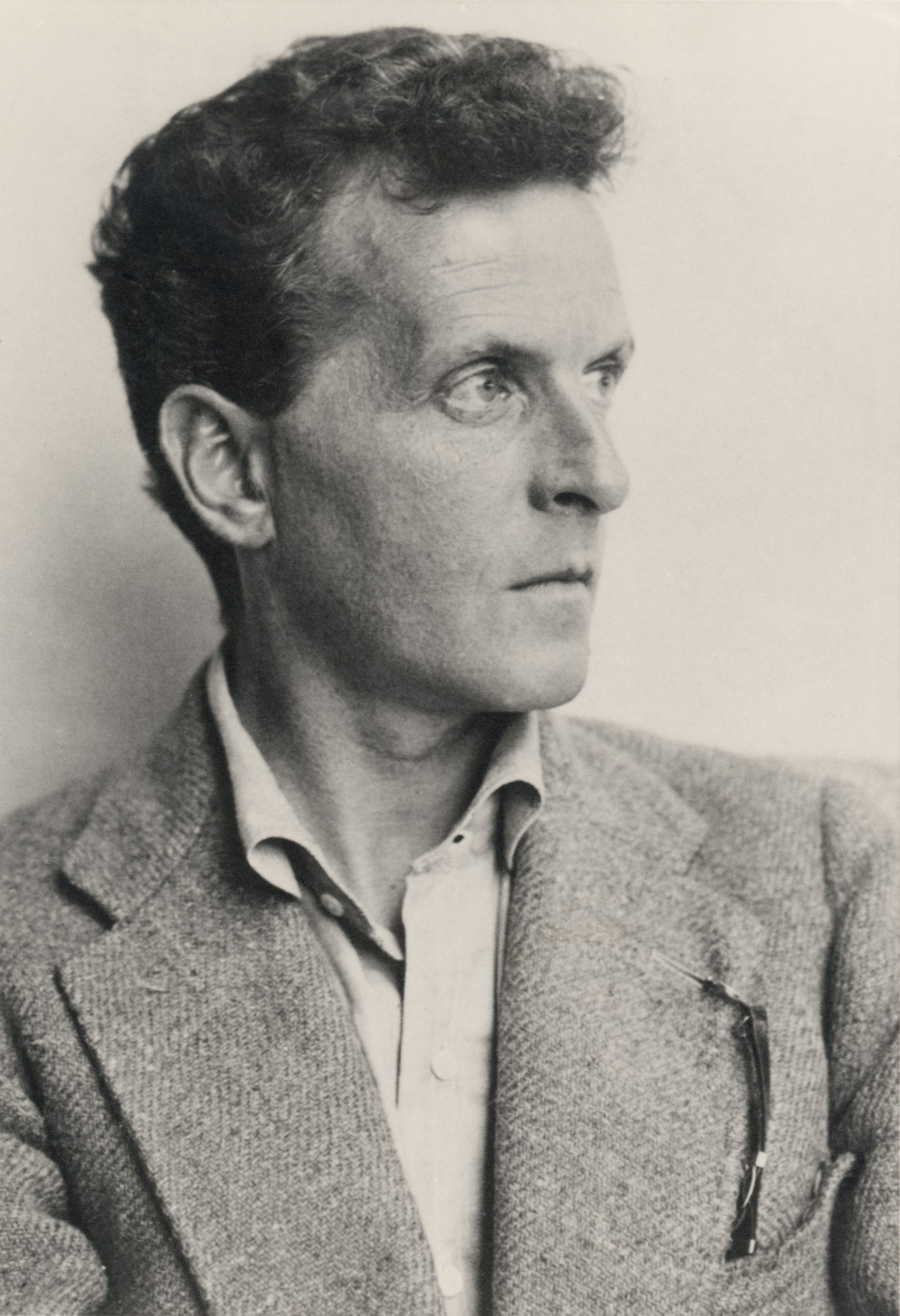
“The limits of my language mean the limits of my world.”
Ludwig Wittgenstein, Tractatus logico-philosophicus, 1922 (5.6)
“To say what is”
But what, exactly, is ‘what is’?
“To say what is.” – But what, exactly, is what is?
This week SPIEGEL put the AfD’s candidate for the office of Minister-President of Saxony-Anhalt on its cover. Since then, criticism has been raining down on the editorial team, from right to left, from politicians and from other media. The newsmagazine is being criticized with rare unanimity.
Dirk Kurbjuweit of SPIEGEL justifies the editorial decision with the founder’s mandate: “Sagen, was ist” – translated by SPIEGEL itself as “Tell it like it is”, but more accurately rendered as “To say what is.” Invoking the same phrase, PIONEER’s Gabor Steingart senses that SPIEGEL is “on its way to becoming a left-wing Fox News.” He is no longer saying, he claims, what is, but practicing opinion journalism instead.
Is Is Not Is
But what, exactly, is that – what is? Or, asked with Aristotle: “τί τὸ ὄν (tí tò ón) – what is being?” – Contrary to the assumption, and the claim, made by both SPIEGEL and PIONEER, that one can simply say what is, Aristotle already explained: “Being is said in many ways” – τὸ ὂν λέγεται πολλαχῶς (to on legetai pollachōs). He develops a theory of categories that order our speech about being: quantity, quality, position, relation, and so on.
Simply put: the word is means something different each time, depending on whether I say: It is hot. Or: She is more intelligent than he is. Or: Friedrich Merz is Chancellor. Or even: Friedrich Merz is a good Chancellor.
Aristotle identified around ten categories in which being can be predicated. Much of what something or someone is, is changeable. The apple is first unripe, then ripe. It is first on the tree, then on the ground. It is mine or yours. – Yet there is something that the apple itself is, its ousia, as Aristotle calls it, its substance or essence, as the Latin translated it, or even the hypokeimenon, the underlying, from which the modern subject emerged.
If we want to say what is, we are searching for that (unchanging, true) essence of things. The core, the underlying. That is the claim of SPIEGEL, and the accusation levelled at PIONEER. But even the ancient Greeks already sensed they were onto a paradox here. Plutarch tells of the “Ship of Theseus”, whose planks were, one by one, all replaced. Some claimed the ship had remained the same throughout; others, that it was no longer the same. How, then, is one still to say what is?
Language as the “House of Being”
We are cutting radically short here (and impermissibly so): philosophy arrived at the insight that the essence of a thing is not an inherent property, but a linguistic attribution.
“Language is the house of Being. In this home, man dwells” (Heidegger, Letter on Humanism, 1946)
Because we dwell in it, we cannot get beyond language by means of language. The problem with saying what is does not lie in the is. It lies in the saying.
“The limits of my language mean the limits of my world” (Wittgenstein, Tractatus 5.6)
That is why the world looks different in different languages (Guy Deutscher). Reality does not exist in pure form.
Language itself has no fixed point, but consists of mutual references (Saussure). At the latest since language models started formulating all manner of impressive sentences without ever having seen the world, this much is clear. But it also means that we can only make statements about whether something is true or is false within a (linguistic) reference system.
This insight does not open the door to absolute relativism: for once we have committed to a reference system, true and false statements are entirely possible within it. Whoever accepts the reference system of medicine must accept that measles vaccines save lives. Whoever accepts the reference system of physics (and most of us rely on the brakes in our car) must accept that global warming is owed to the CO2 emissions of the recent past. – One can, of course, deny both; but then one finds oneself in a (performative) self-contradiction and can no longer be taken seriously, as Habermas and Apel pointed out.
To Say What Is?
SPIEGEL now manages the feat of entangling itself in a contradiction while also uttering a tautology:
“The AfD is here, unfortunately it is strong and therefore relevant, which is why it is the subject of our enlightening coverage, in every form.” (emphasis mine)
What it is really saying is: “The AfD is spoken about, unfortunately it is spoken about a great deal, which is why we speak about it.”
“The AfD is spoken about, therefore we speak about it.” – That is the obvious part, the tautology: a = a. And: “Unfortunately it is spoken about a great deal, therefore we (too) speak about it.” That is the contradiction: a ≠ a.
In a single sentence, SPIEGEL thus paces out the boundaries of Western logic:
“Contradiction is the outer limit of propositions, tautology their substanceless centre” (Wittgenstein, Tractatus, 5.143)
Language Creates Reality
But the situation is more complicated still: where medicine and climate science observe changes in a system that are independent of our language, the political system offers no such thing. For the political system consists of nothing but language. Politics acts through language. Laws are language. And elections, too, are linguistic utterances. Even the order to exercise the state’s monopoly on the legitimate use of force is issued in linguistic form. This is the great challenge in describing discourses in and about politics, society and culture: language does not simply say what is – it creates the reality it describes.
When the AfD candidate signs the SPIEGEL cover, he makes use of a cultural symbol and changes reality: an enlightening wanted poster becomes an autograph card, the criminal becomes a pop star. This is how language shapes reality. It does so explicitly, as John Austin set out in his speech act theory. But it also does so implicitly, whenever it merely claims to say what is – or accuses others of failing to do just that.
Every article, every comment shifts the frame of reference. Dirk Kurbjuweit writes: “We do not suffer from the hubris of believing that our journalism can influence election outcomes.” – That is not hubris. That is how public discourse works.
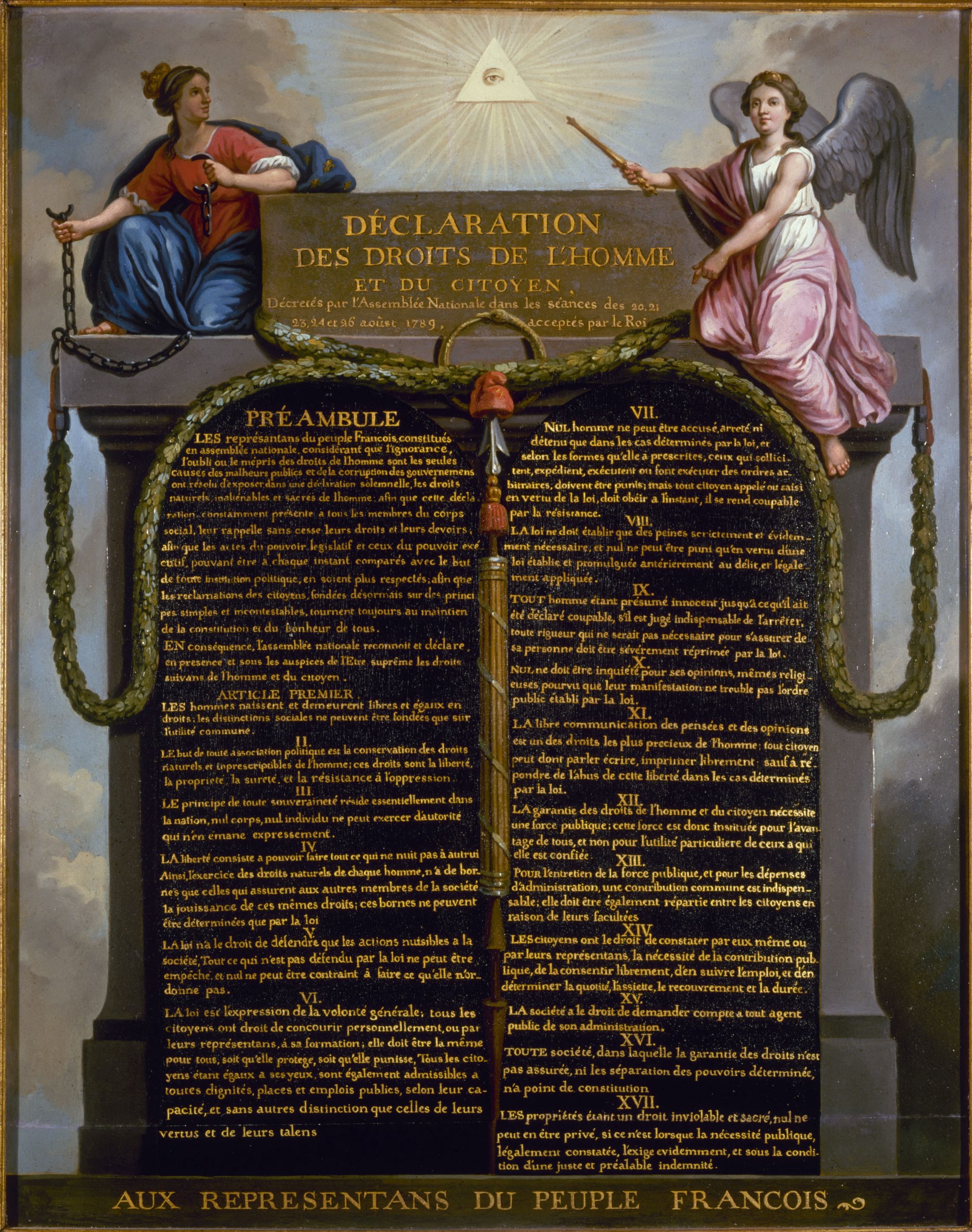
“Les hommes naissent et demeurent libres et égaux en droits.” “All men are born and remain free and equal in rights.”
Declaration of the Rights of Man and of the Citizen, Art. 1, 1789
Who is actually arguing when German Railway is arguing with German Television?
On the philosophy of corporate personhood
On 23 July, German Public Television ZDF broadcast the documentary “Our Railways: Loved, Hated – Dangerous?” (link to the documentary). Deutsche Bahn responded, pointing out various errors and inaccuracies, which ZDF subsequently corrected to some extent. (Details here)
However, the dispute entered a second round. Last Thursday, the German newspaper F.A.Z. reported that Deutsche Bahn was demanding the article be taken down:
“Deutsche Bahn […] is entitled to corporate personality rights. It need not accept one-sided reporting.” (F.A.Z., 30 July 2026)
According to the F.A.Z., Deutsche Bahn’s lawyer refers to a ruling by the Federal Court of Justice (Case No. VI ZR 346/24). – And this is where it gets interesting.
Not only because this ruling addresses the question of at what level of support for the AfD and right-wing organisations one must accept being publicly labelled “far-right”, or because the Federal Court of Justice concludes that the term “far-right” is “negative” and “defamatory”. (For details, see here) – That in itself would be worth an essay.
No, what makes it interesting is that Deutsche Bahn’s lawyer argues that, as a commercial enterprise, the company is a legal person and is entitled to the same fundamental rights as the claimant before the Federal Court of Justice who felt his honour had been violated – although that claimant was a natural person.
By claiming fundamental rights as a legal person, Deutsche Bahn is following a long tradition: the very first public limited company to be established as an independent legal form was a transport company. And the first landmark judgements on the question of fundamental rights for companies were brought by a railway company. – But more on that later.
At first glance, the idea that a company could claim human rights seems far-fetched. The French Declaration of the Rights of Man and the American Declaration of Independence deliberately refer only to men. For Enlightenment philosophy, it was clear that only humans, as individuals and rational beings, could be the holders of rights.
However Article 19(3) of Germany’s constitution, the Grundgesetz, states otherwise:
“Fundamental rights also apply to domestic legal entities, insofar as they are applicable to them by their very nature.” (Art. 19(3), Grundgesetz)
In this regard, the Federal Court of Justice (BGH) states:
“As a manifestation of the general right of personality, the corporate right of personality protects the […] social claim to recognition of corporations as commercial enterprises[.] An infringement of the right of personality is only unlawful if the interest of the affected company that warrants protection outweighs the legitimate interests of the other party.” (Federal Court of Justice, I ZR 217/15, 2017)
If one seeks the historical roots of this perspective, one finds them in medieval canon law. At that time, individuals did not yet possess rights as of themselves – that was a concept of modern philosophy – but all rights flowed from divine sovereignty, mediated through the Church and the ruler appointed by God (through the Church). (We recall: “Paris is worth a Mass.” – Paris vaut bien une messe.)
However, even back then there were institutions such as foundations, religious orders, hospitals, guilds and universities. The question facing the Council of Lyon in 1245 was this: do such institutions have enough personality to be excommunicated – that is, to be excluded from the salvation of God mediated by the Church – if they oppose the Pope? This resembles, a little, the question the Bahn is raising: whether it has the right to be offended as a person.
The Council ruled at the time that a universitas – the technical term for such institutions – could not be excommunicated, because whilst it was a legal entity, it had no soul. Now, this says nothing about whether Deutsche Bahn or the ZDF have a soul, but in his comments on this decree, Pope Innocent IV codified two centuries of legal philosophy and distinguished between a societas, which consists solely of its members and possesses no rights of its own, and precisely that universitas, which is itself the bearer of rights.
This distinction was important for the debate within the Church: it made it possible to safeguard the Church’s assets from the claims of bishops and parish priests and to preserve them for the future. This arrangement also meant that nuns and monks lived in legal poverty, even though their orders owned land.
Modern capitalism, too, could not have existed without this distinction: the limited company is conceived in parallel to this universitas. These are legal constructs that can only be conceived because one regards an abstract entity as the bearer of rights, which takes precedence over the individuals acting on behalf of that abstract entity.
The Dutch East India Company (VOC) was founded in 1602 and is regarded as the first publicly listed limited corporation in Western history. From the outset, it enjoyed far-reaching rights, including the right to establish overseas bases, build infrastructure and maintain its own army. Crucial to the development of the private sector was the idea that Innocent IV had already conceived: the members of such companies do not act in their own name, but in the name of their companies. Consequently, their personal liability is limited. The company becomes a legal entity in its own right.
People were still very cautious about establishing such state-like corporations, but the invention of the railway and industrialisation required vast amounts of capital. And hardly anyone was prepared to put their personal assets on the line for the construction of a railway or even an iron ore mine. Consequently, more and more limited companies were permitted, and regulations were eventually relaxed entirely. Today, anyone can set up a limited liability company, regardless of the purpose. The only thing most companies are not allowed to do is set up armies. Not yet, at least.
For in the 19th century, something happened that neither Innocent IV nor Johan van Oldenbarnevelt – the provincial advocate of the Province of Holland, who had played a decisive role in pushing through the establishment of the VOC – would have anticipated. The philosophy of modernity, according to which every individual is, in and of themselves, the bearer of rights, was extended to legal persons.
In the United States, the rights to which companies were entitled were interpreted ever more broadly in the course of case law. After the Civil War, companies – led by the railways – claimed the 14th Amendment, ratified in 1868, for themselves; this amendment was actually intended to secure equal rights for freed slaves as citizens.
One such case was the lawsuit brought by the Southern Pacific Railroad (1886), which was challenging tax increases imposed by a local county. The company sought a ruling from the Supreme Court that a corporation, too, possessed civil rights. In an opening statement, Justice Waite ruled that the question was not worth clarifying – it had already been settled:
“The court does not wish to hear argument on the question whether the provision in the Fourteenth Amendment to the Constitution . . . applies to these corporations. We are all of the opinion that it does.” (Justice Waite, 1886)
And since everyone shared this view, between 1868 and 1912 over 300 cases involving corporations were heard in relation to the 14th Amendment, but only 28 cases involving Black Americans. More recent history shows that these rights are constantly being extended. In the US, corporations have the right to free speech (Citizens United v. FEC, 2010) and the right to freedom of religion (Burwell v. Hobby Lobby, 2014). The right to free speech grants them extensive influence over the funding of political campaigns. – Some American scholars are already asking when they will be granted the right to bear arms.
We live in a world in which the rights of corporations are treated in the same way as the rights of individuals. Looking at the historical development, one gets the slight impression that we have stumbled into this situation: a Pope’s notes on a conciliar decision, a statement by an American judge that this was not even a question, and finally Article 19(3) of the German Grundgesetz, for which there is no precedent in the Weimar Constitution and about which the minutes of the Parliamentary Council say very little.
In contrast to the US, case law in Germany and France still follows the principle established by Innocent IV that a universitas has no soul. Consequently, French case law rejects the right to privacy for companies. And German case law refers only to Article 2 of the German Grundgesetz (liberty to act), not to Article 1, which protects human dignity.
But the problem with all this is that human rights were originally formulated as the rights of individuals vis-à-vis the state (and the Church) as legal entities. If we now grant these rights back to legal entities, which can use them not only against one another but also against individuals, we risk jeopardising one of the great achievements of the modern age. – And by that I do not mean the railway.
“Apparently at realistic profit rates, it doesn’t pay to keep a forest in existence at all.”
Paul Samuelson, 1976
Would we still plant a tree today if the world were to end tomorrow?
Samuelson, discounting the future, and the clearing of the forests
There is a sense of doom and gloom in the air. The economy is struggling, so environmental efforts are being called into question. It is time to ask the philosophical question: would we still plant a tree today if the world were to end tomorrow?
Nobel Prize-winning economist Paul Samuelson analysed this issue in 1976 in an article on sustainable forestry. He reports on management consultants who had concluded that planting trees was not worthwhile; indeed, to optimise returns, one would have to fell the trees before planting them.
Optimising yield
Ask forestry scientists about the maximum sustainable yield of a forest, and they will point to a specific moment for felling: the point at which a tree’s expected growth in the coming year falls below its average growth so far.
From that moment on, a newly planted tree will produce more wood per year over its life cycle than the old tree would add in its next year of growth. Harvesting at that time maximises total timber yield over the long run.
Optimising financial return
Economists, however, think differently. For them, biological growth is only part of the story. Opportunity costs—captured in the discount rate of an investment calculation—matter just as much.
Following this logic, a tree should be felled as soon as its growth rate no longer exceeds the market interest rate. Since nature rarely outperforms capital markets, this reasoning implies that it would almost always have been better to fell the tree last year and invest the proceeds in a balanced ETF.
That is the logic Samuelson attributes to these management consultants.
Deforestation as a consequence
This logic came to dominate economically driven forestry from the dawn of the modern era, when timber was needed for shipbuilding, through early industrialisation, when wood fuelled energy production and iron smelting. The result was predictable: vast forests in Europe and North America disappeared.
Sustainability, on its own, was not profitable enough.
This was economically rational then—and it remains so today. The ongoing destruction of primary forests is the empirical proof.
The fear of death as the cause
At its core, the problem lies in how economics treats time. Something available today is valued more highly than the same thing available tomorrow. This reflects a simple fact: I will not live forever. As I might die tomorrow, income today is preferred to income tomorrow.
Interest rates translate this intuition into mathematical models and produce a net present value (NPV). For very long-term investments—an oak tree takes two hundred years to mature—this NPV approaches zero.
Impending death as a counterargument
But impending death can also be interpreted differently. The closer it comes, the less relevant differences in interest rates become, because the effect of compound interest diminishes. Suddenly, even planting trees becomes worthwhile, as the gap between alternative returns narrows.
Put differently: if we die tomorrow—or if the world ends tomorrow, which amounts to the same thing—opportunity costs fall to zero. There are no longer any alternatives to choose from.
Put differently again: only if we will not see tomorrow—only if the world ends tomorrow—does it make economic sense to plant a tree today.
“It is therefore clearly possible to have economic arrangements that are fundamentally capitalist and political arrangements that are not free.”
Milton Friedman, 1962Francis Fukuyama, 1989
Why business won’t save democracy
On the adaptability of business to any form of government
Many European companies have spoken out in defence of democracy following the American president’s speech in Davos. They cite economic reasons. But the economic argument will not suffice.
The adaptability of the economy
We all saw the American tech elite’s gestures of submission at the White House last autumn. We also remember that they and many other corporations have discontinued or reduced their diversity programmes; including European companies operating in the US. The same applies to climate targets.
There is always great moral outrage, but the public debate ignores the fact that diversity and climate were only on the economic agenda because they paid off. Now the circumstances have changed, the calculations have been redone and the strategy adjusted. That’s how it works in business.
And it has always worked this way: German industry had long opposed Hitler because it feared his customs policy. When he became Reich Chancellor in 1933, it changed its stance – and how: it donated 3 million Reichsmarks to his re-election campaign in March 1933. And immediately after the election, it organised the Adolf Hitler donation, which was intended for him personally.
The German Nazi regime was not an isolated case: in many (Western) dictatorships, the business community worked brilliantly with the government: South Korea, Spain, Greece, Chile – to name but a few. And even today, business maintains excellent relationships with many other dictatorships: German exports to Saudi Arabia have grown twice as fast as those to France, Italy, Great Britain or Spain over the past 20 years. Exports to China have grown almost six times as fast.
Companies follow economic logic. And economic logic is agnostic about human rights or environmental consequences as long as these are not translated into a framework for action by laws. The business of business is business.
Economists’ doubts about democracy
We assume that democracy and a prosperous economy belong together. However, this hypothesis still cannot be empirically proven with data. It has also only been widely held for about a generation. In 1989, Francis Fukuyama proclaimed the
‘end of history’ and outlined the state model of the future as a ‘liberal democracy […] with easy access to VCRs and stereos’. (Francis Fukuyama, 1989)
As recently as 1960, Milton Friedman and the economic mainstream disagreed. For Friedman, democracy was not a prerequisite for prosperity; rather, economic freedom was the necessary condition for political freedom. Without capitalism, there can be no democracy.
The founding fathers of economics were even more adamant in their belief that a democratic order was detrimental to economic development because it undermined the pursuit of prosperity: Adam Smith considered it the task of government to protect the property of the wealthy from the poor. And in the mid-19th century, French economist François Guizot declared that universal suffrage would lead to the poor expropriating the rich. Vilfredo Pareto was also convinced:
‘[Democracy] digs its own grave and destroys what it brought into being.’ (Vilfredo Pareto)
In the United States and parts of Europe, such voices are becoming louder again. There are fears of falling behind in the ‘system competition’ with China. We can’t afford Democracy no longer, it is said.
Another argument
Liberal society is about the protection of minorities, freedom of the press and the arts, freedom of religion, protection of privacy, control of state action by the people, preservation of human dignity – if all of this is measured against the question of whether it leads to greater prosperity, then we are surrendering liberalism to economic arguments. And then it is up for grabs as soon as it is no longer worthwhile.
A liberal society protects the individual from the state. That is the classic argument. It stems from a time when the state was represented by powerful monarchs. Translated into our times: a liberal society protects the individual from the arbitrariness of the powerful, even if they can organise a majority.
Or even more pronounced: Liberal society protects the weak. It protects those who are not worth standing up for; those who are of no use. It does so because doing so is liberal, not because it pays off.
‘A Spirit of Dialogue’ – That was this year’s motto for the World Economic Forum. Genuine dialogue in the Socratic sense, where one can learn something, present one’s insights and doubts, and listen to the arguments of others, is not in good shape at the moment. So it was probably right to invoke the spirit of dialogue instead. – Though, was it?
“Despite all the frustration and anger of recent months, let us not be too quick to write off the transatlantic partnership. […] No, we Europeans, we Germans, know how precious the trust on which NATO is based is. In this age of great powers, the US will also depend on this trust. It is their and our decisive competitive advantage.” (German Chancellor Merz, Davos 2026)
This was the German Chancellor’s pledge. Strictly following Adam Smith, he did not appeal to the goodwill of the Americans, but to their self-interest. He spoke as an economically minded person, as someone who relies on reason and the power of better arguments. Towards the end of his speech, he once again invoked the spirit of the Enlightenment:
“Let us be inspired by what is perhaps the most important lesson of enlightenment: our fate is in our hands. It is our responsibility and our freedom to shape it.” (German Chancellor Merz, Davos 2026)
For those who are not familiar with those spirits, the French President explained the core idea of the Enlightenment once again for simple minds:
“But we do prefer respect to bullies. We do prefer science to conspiracy theories, and we do prefer the rule of law to brutality.” (Emmanuel Macron, Davos 2026)
This was widely perceived as a courageous statement – reinforced by the sunglasses – but anyone who reads Macron’s speech understands that the reference to our values was ultimately little more than an argument for investing in Europe: here there is stability, here there is reliability. Macron appealed to the self-interest of global companies.
Both speeches evoked the spirit of dialogue, the spirit of enlightenment that has been whispering to us for over 200 years: you can afford to be a decent person, it will pay off. So far, it has always worked out well. To quote Canadian Prime Minister Carney: ‘The fiction was useful.’
No one had yet asked the crucial question: But what if it no longer pays off? Will we then stop being decent? The answer could be painful. For dignity has no price. According to the great philosophers of the Enlightenment, it is not subject to the regime of utility maximisation. Dignity is, to quote the German Constitution, ‘inviolable’. The value of human beings is not measured by what they contribute. Our common foundation is not prosperity.
The American president, on the other hand, believes that people are different in value and that their value is reflected in the extent to which they can prevail:
“Many of you in this room are true pioneers. You’re truly brilliant, brilliant people. Just your ability to get a ticket is brilliant, because you have about 50 people for every seat.” (Donald Trump, Davos 2026)
His entire speech exuded that striving for dominance, that regaining of strength, that assertiveness and that contempt for the weak.
It was therefore no coincidence that the Canadian Prime Minister began his speech in French. French is not Carney’s mother tongue; it is the mother tongue of a minority of around 25% of Canadians. Carney thus paid tribute to those who depend on the majority to show consideration. He put himself in the shoes of those who struggle to make themselves heard in the chorus of the strong, who struggle to be understood by the assembled elite. Carney bore witness to the diversity of the human community even before he had said anything substantive. In doing so, he set himself apart from the rhetoric of the American President in style, content and language.
French is also the language of the revolution against authoritarian regimes, the language of the Enlightenment, the language in which human rights were first formally declared and written down, those human rights that protect the weak from the strong. Americans may have forgotten, but it was French soldiers who supported them in their War of Independence against the British Crown. In this language, Carney reminded the weak:
“La puissance des moins puissants commence par l’honnêteté.” – “The power of the less powerful begins with honesty.” (Mark Carney, Davos 2026)
The Canadian Prime Minister compared the current situation of the international order with the communism of the 1970s described by Vaclav Havel in his essay The Power of the Powerless. Everyone put communist slogans in their shop windows, but no one believed in them. The system only survived because no one was honest.
It worked for a long time. According to Carney, occasionally, the hegemon was allowed to break the rules because we all benefited from free sea lanes, a stable financial system, common security and international agreements. That has now changed. However, honesty not only requires a clear description of the situation, it also requires consistent action:
“Apply the same standards to allies and rivals. When middle powers criticise economic intimidation from one direction but stay silent when it comes from another, we are keeping the sign in the window.” (Mark Carney, Davos 2026)
Carney called on states and companies to take the signs out of the window. He called on the assembled elite to stand by their values and enter into (pragmatic) cooperation based on these values, instead of gathering in strongholds around a hegemon.
In doing so, he emphasised the idealistic character of the community that calls itself the ‘West’, which the US President also invoked so often in his speech. But contrary to what Trump believes, the ‘West’ is not a geography, a culture, an ethnicity, a skin colour, nor a business or economic model. The ‘West’ is the fundamental conviction that human dignity is not measured by utility. It is the conviction that the powerful cannot do whatever they want, as laid down in the French Declaration of the Rights of Man of 1789:
Les hommes naissent et demeurent libres et égaux en droits. (Art. 1) La liberté consiste à pouvoir faire tout ce qui ne nuit pas à autrui. (Art. 4)
All men are born and remain free and equal in rights. (Art. 1) Freedom consists in being able to do anything that does not harm another. (Art. 4)
For those who struggle with French, there is also an old English-language document:
“We hold these truths to be self-evident, that all men are created equal, that they are endowed by their Creator with certain unalienable Rights, that among these are Life, Liberty and the pursuit of Happiness.” (US Declaration of Independence, 1776)
“What should I do?” – Immanuel Kant defined this question as one of the core questions of what makes a person human. Today, we usually answer this question with: “What makes me happy and satisfied.” We don’t necessarily do what others expect of us, but what we think will make our lives better. – We follow our preferences and optimise what seems useful to us. Since we assume that everyone does this, companies promise bonuses to increase employee performance and politicians invent incentive mechanisms to guide our behaviour. In this way, we hope to bring together what society demands and what individuals want.
The American economist Gary Becker was awarded the Nobel Prize in Economics in 1992 for his theory that all human behaviour follows such economic utility considerations. He wanted to explain illegal parking, career and partner choices, the number of children, discrimination against minorities, even suicide and selflessness with rational, benefit-maximising decisions by people. The methodology of classical economics could be applied to all areas of society and all types of optimisation goals. People optimise their utility not only in monetary terms, but in the all the ways they perceive it.
We know from psychology and experimental economic research that people do not always act rationally and that they are prepared to put their own immediate advantages behind in favour of long-term fair cooperation. However, Becker’s insights have had an impact beyond economics and continue to shape public discourse to this day: “Performance must be worthwhile”, “Good wages for good work”, “Incentives for ecological behaviour”,… – the entire political spectrum shares the economic perspective on life. Hardly anyone still assumes that people do something because it is the right thing to do or because decency demands it. We invest in education because it is profitable. We appoint women to management boards because it has economic advantages. The world is a business case. “What’s in it for me?” has become the test question for “What should I do?”.
Economics alone is not responsible for this economic transformation of our thinking. The roots lie in modern philosophy, which has characterised our Western thinking and actions for almost four hundred years. Its basic idea is: I am free to recognise and to shape the world. – This is based on two assumptions: (1) I am aware of myself and my freedom. (2) I and the world are part of a rational system. – Today, we take this for granted. But before modernity, people saw themselves as being born into a community by fate. One’s own place was predetermined, the world largely eluded one’s own cognitive and creative possibilities, numinous forces ruled in it. One was dependent on institutions and tradition.
The self-centredness
With the discovery of new continents and the realisation that the earth orbited the sun, the traditional knowledge of the world became uncertain in the early modern era. In the mid-17th century, the French mathematician and philosopher René Descartes therefore sought a new foundation for the sciences, a foundation that would be more reliable than the traditional writings of the Bible or Greek philosophy.
He found this foundation in the thinking subject: if one could doubt everything, one could not doubt that one doubts. As long as one doubts, one must necessarily exist. Even God cannot order me to stop doubting. This is why Descartes replaces God at the centre of the world with the thinking ego. The sentence “I think, therefore I am” was born.
It was only logical to declare self-preservation the highest virtue. Greek philosophy still answered the question “What should I do?” primarily on the basis of the doctrine of the state, while Christian theology answered it on the basis of the doctrine of God. Now the question “What is useful to me? What makes me happy?” takes centre stage. The criterion for a successful life is no longer a functioning state or God-pleasing behaviour, but individual benefit. “The more a person strives and is able to seek what is useful to him […], the more virtuous he is,” wrote the Dutch philosopher Spinoza in the mid-17th century. This idea became the principle of utilitarianism in the late 18th century and found its way into Adam Smith’s economic ideas: A good society is one in which the utility or happiness of individuals is maximised. The pursuit of happiness becomes a human right.
The rational system
Meditations on one’s own consciousness have not only existed since the modern age. But before that, they seek the foundation of the ego not in its self-awareness, but in the incomprehensibility of God. In humility, they confess the limitations of the subject. However, as soon as the foundation of cognition is shifted to the thinking ego, there must and can no longer be any unfathomable secrets as a matter of principle. The paradox that many things were nevertheless de facto unknown was solved in time through the idea of progress. We did not fundamentally not understand; we did not yet understand. And what was not yet understood could be categorised into a rational system and then researched.
Gary Becker’s claim to explain all behaviour rationally is founded here. The German philosopher Georg Wilhelm Friedrich Hegel tried his hand at this two hundred years ago. For him, too, human behaviour and the world can be explained rationally. He did not yet use economic concepts for this, but rather concepts from the philosophy of consciousness. For him, God is an absolute, world-shaping reason that would become fully conscious in human history. The progress of history would eliminate all remaining differences. The equations work out in the end because God, man and the world are parts of a rational system.
This strictly logical approach was attractive to the emerging economy of the time which was faced with the question of how a functioning community could be created from individual interests. In its answer, it followed Hegel: through a rational system. The Prussian lawyer and senior civil servant Hermann Gossen tried his hand at a system of world equations 1854. With detailed calculations, he wanted to visualise the invisible hand and show how the egoism of individuals must inevitably lead to the common good. Systematisation did not stop at economics; the management of companies was also rationalised. With his book The Principles of Scientific Management, Frederick Taylor laid the foundations of business administration in 1911.
The method was so successful that today it is no longer only used in business: Sports clubs, theatres and museums, even public authorities are “managed”; that is, run according to rational, systematic criteria. All areas of society can be expressed in utility functions. Their development can be predicted, and their actors can be induced to behave in a certain way through incentives. Economic models and business strategies are based on this, which aim to rationally depict the world as a whole. Where there is still uncertainty, we hedge our bets on the markets, whose pricing ensures that the equation works out at all times.
The limits of reason in the encounter with the Other
Modernity set out to fight for the individual and their freedom. Its tool was reason, which in its economic form brought us unimagined prosperity that made material independence possible for many in the first place. But reason, if it sets itself up as absolute, has a downside: if the rational system is supposed to explain everything, then there is no room for individuality or otherness. Philosophically, the other becomes a function of my thinking, and economically, a variable of my utility function. The unknown in an equation is always already the known, stated Theodor W. Adorno and Max Horkheimer in their analyses of the Dialectic of Enlightenment.
If you want to prevent the absolute systematisation of the world, as was attempted in the totalitarianisms of the 20th century, then you must not level out the difference between the other and me. The other must not become part of my system, neither in thought nor in action. The French philosopher Emmanuel Levinas therefore placed the difference between the other person and me at the beginning of my thinking. It does not begin with the rational ego that organises its relationship to the world. It begins with the other person who looks at me and to whom I must relate. The question that arises for me is not: “How do I become happy?”, but: “How do I justify the right to dispute his place in the world?” Before I can claim a right to the pursuit of happiness, even to life or freedom for myself, my existence needs to be justified to others. Levinas quotes Dostoyevsky: “Each of us is guilty of everything before everyone, and I am the guiltiest of all.”
This perspective is alien to us. We have become accustomed to looking at and for ourselves first and foremost: Self-realisation at work, work-life balance, mindfulness of our own needs – these are our topics. We even tell ourselves that we are criticising the system, but in reality, it is hard to imagine more economically rational behaviour. We also teach our children this: Education is not an end in itself, and commitment is not a service to others. No: good grades guarantee a good salary, and voluntary work increases the chances of being hired. – As with rats in animal experiments: there is a reward for good behaviour. Our new fundamental question therefore seems only logical: “Why should I do something if I don’t benefit from it myself?”
Immanuel Kant would have replied: For a successful life, it is not enough to increase one’s utility and become happy, one must also prove oneself worthy of bliss. For him, there were two possible answers to the question “What should I do?”: the economic-pragmatic one asks what is useful to me and what makes me happy. The moral one focuses on decency and human dignity, which consist of acting in favour of others, even and especially when it does not benefit me. It cannot be traced back to pragmatics. Decency is not a preference of the individual, but an attribution of others.
Levinas once said that “after you”, giving way to others, is the core of morality: unintentional renunciation. Working for others. Not being a contemporary of his success. – One could accuse this attitude of being naive. Society cannot be organised in this way. But neither can the fact that the western middle and upper classes are primarily concerned with their own well-being. It won’t work without a little dignity and decency. We cannot demand or promise a reward for everything we do for others. Perhaps it is naive to believe that the other person is a good person. This has always been the argument against a society that is based on decency. But that I am a good person is neither a question of faith nor is it naïve. It is my decision and my responsibility.
Translation of a text published on 29 December 2024 in the Frankfurter Allgemeine Sonntagszeitung
Since the machine started talking to us, the topic of artificial intelligence is back in fashion. Some even expect humans to be replaced by a super-intelligence. The ideas are anything but new. They rely on us forgetting that human life and coexistence are not limited to thinking and talking.
Computers have been calculating faster (and more reliably) than humans for a long time; that’s exactly why they were invented. No one was bothered by this: The use of punch cards and magnetic tapes was too complicated, the large devices were too unwieldy. But even when the IBM computer Deep Blue defeated the then world champion Gary Kasparov in chess in 1996, there was no great excitement. It was quickly understood that chess is nothing more than an optimisation problem in a rule-based environment. Deep Blue was able to analyse and evaluate over 100 million positions per second. The world champion could no longer keep up. The fact that Deep Blue’s successor Watson prevailed against the defending champions in the 2011 Jeopardy game on American television did not make it onto the German front pages.
But now that the machine tells stories and paints pictures, researches and writes newspaper articles, analyses company data and handles corporate planning, the excitement is huge. Newspapers are publishing weekly newsletters; companies are developing AI strategies, and the valuation of digital companies is reaching new highs. There is a gold-rush atmosphere. At the same time, however, the working world of the cultural and economic elite is changing: suddenly they themselves are the subject of technological progress, which they previously only described or managed. Concern about this high-risk technology is also gripping the intellectual elite, because they themselves no longer understand what is happening. Much of the unrest could have to do with this.
But not only that. Knowledge, reason and language are the very definition of being human. We are homo sapiens, the knowing human being. We are the animal rationale, the rational living being. And according to a definition that predates Aristotle, we are the zoon logon echon, the living being that has language. Language seems to be the core of what we are. Without language, our knowledge and reason remain mute. With language, we enter into contact with the world and with other people.
Now, thanks to an incredibly large data set and even greater computing power, the machine has managed to reformulate language as a mathematical-statistical phenomenon and impress us with its analysis. We hear it speak. And we like what we hear, as it reflects all the digitised works of world literature and the findings from scientific publications of an entire generation: “The spirit of the world from the machine”, as the philosopher Hegel put it for the cover story in March 2023.
Is the machine becoming human? Are we on the verge of an intelligence explosion? – This question is also an old one. As early as 1965, the British mathematician Irving John Good predicted the invention of an “ultra-intelligent machine” that would be far superior to humans in all intellectual abilities. This machine would be the last invention that humans would have to make, after which they would no longer be needed.
Ten years ago, the Swedish philosopher Nick Bostrom, who teaches in London, described artificial intelligence as the most promising way to develop such a “superintelligence”. As a transhumanist who expects and welcomes the improvement or replacement of humans by a technologically optimised life form, Bostrom even began to consider whether and to what extent humans would be obliged to treat thinking machines according to human moral standards and, if necessary, to be of service to them.
However, the debate sometimes feels as if the last hundred years of philosophical reflection have not taken place. They take Hegel’s “world spirit”, which is now over 200 years old and is supposed to be the realisation of reason in world history, translate it into a logical-mathematical problem and expect that the algorithms of superintelligence will one day solve it.
Ludwig Wittgenstein already knew over 100 years ago that human problems are not nearly solved when all scientific questions have been answered. And anyone who has listened to the philosophers of existentialism, critical theory, phenomenology or post-structuralism over the past 50 years knows that the questions of reason, language and the human being are not easy to answer: Human existence is not limited to intelligence, and our access to the world is more than just analysing and processing data.
Philosophy calls the phenomenon that human beings do not just happen to have a body, but that they are this body, “corporeality”. Human existence does not result from a combination of hardware and software but is expressed in a body that is sentient and limited in space and time.
In our sensitivity, we encounter the world and others without being able to defend ourselves against them. “Man bathes in the elements”, wrote the French philosopher Emmanuel Levinas. We metabolise our world long before we analyse it or talk about it. We have no control over our pleasure, and even less over our pain. In physical pain, we are exposed to the world and cannot free ourselves from it. Where the machine would switch off a malfunctioning sensor. we cannot. We age. No upgrade and no update possible. Even a simple organ replacement is life-threatening.
The spatial and temporal limitations of our existence make it unique. No one can replace me in my body. And I cannot replace anyone in their body. Everyone must die for themselves; everyone must endure the fragility of their own existence until it is no longer bearable. It is not possible to copy the software onto another (identical) piece of hardware. Our body bears the traces of our existence.
This gives meaning to human existence. It is in caring for the lives of others and dedicating our own lives to them that human community is created. Being able to dedicate our lives to only a few is not a problem of our limited computing power, it is the beauty and tragedy of human existence that we call love. The machine cannot love because it is not finite, it cannot suffer because it has no body, and it cannot die for the other because it does not live. It may be able to think and talk, but will it ever understand what it means to love, suffer and die? We hardly understand it ourselves.
The danger of artificial intelligence is that we fall for the machine in all its eloquence and sophistication, that we allow ourselves to be fooled into thinking that all questions can be solved and that humans can be replaced simply because the machine fulfils some functions of our everyday (professional) lives faster and more accurately than we could. When we replace humans with machines in our everyday interactions, we deprive ourselves of that surplus of humanity that is not needed for economic transactions and is not absorbed in intelligence or language.
The office is not just a place where quarterly financial statements, construction drawings, contracts or newspaper articles are produced. Schools and universities are not just places where knowledge is imparted. And doctors’ surgeries and clinics are not just places where illnesses are treated. Everywhere we meet people in their individuality, with all their idiosyncrasies, strengths and weaknesses. Even if machines one day become better managers, engineers, lawyers, journalists, teachers or doctors, they will not become better people. But they could prevent us from becoming them, because the machine illusion of perfection makes us forget and unlearn humility and generosity in dealing with the weaknesses of others.
This essay was published in the German weekly WirtschaftsWoche N°34, August 16, 2024