“Anyone who values his life would prefer
to rob the future for the benefit of the present so far, at least, as to keep life going.”
Irving Fisher, The Theory of Interest, 1930
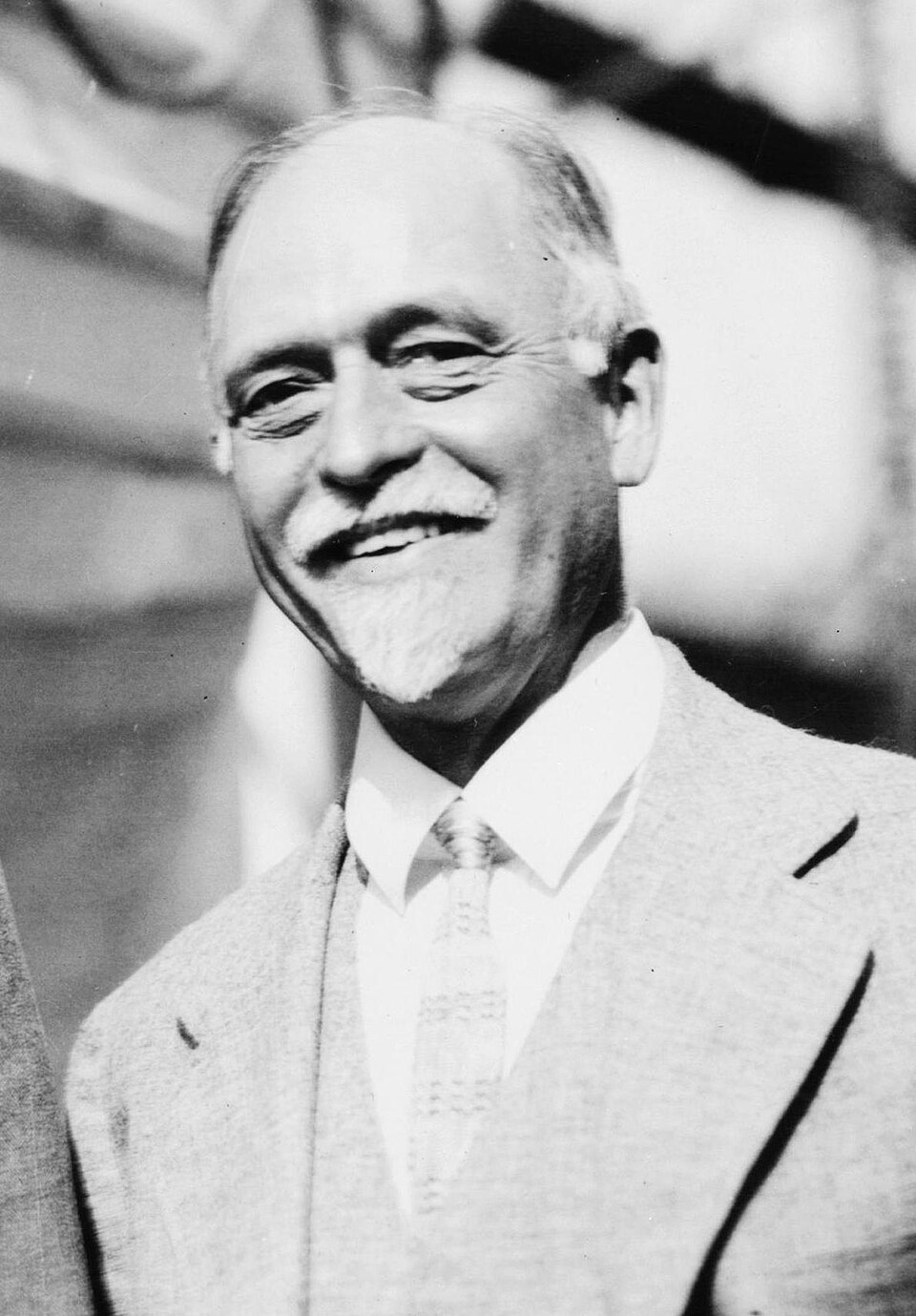
Impatient — with interest
What is left to believe in?
$40 trillion in public debt, a budget deficit near 6 percent of GDP, and the yield on long-term government bonds at a 25-year high. Most experts cite uncertainty as the decisive reason for the latter, and some are warning of a new financial crisis. The US Treasury Secretary, meanwhile, has chosen to speculate: he is buying back long-term bonds with short-term ones. In doing so, he is effectively testing the hypothesis that interest is a purely monetary, and therefore virtual, phenomenon. It may be worth looking instead at the arguments of Irving Fisher, who very nearly a century ago put forward what remains the most influential theory of interest. For him, interest was a real phenomenon, grounded in human impatience.
Interest as a real phenomenon
In his book, still worth reading today, The Theory of Interest: As Determined by Impatience to Spend Income and Opportunity to Invest It (1930), Fisher argued that our willingness to invest money — to trade present income for future income — depends on four factors: the size of that future income stream (which implicitly includes the rate of return), its distribution over time, its composition, and its uncertainty. The sooner we receive the income, and the more certain it is, the lower the future income needs to be relative to the present. The market, he held, brings these factors together with individual preferences and sets the market rate of interest for different investments.
Impatience and mortality
Fisher traced our demand for interest itself back to human impatience. We would rather consume and enjoy today than tomorrow. When our life itself is at stake, he argued, we are even willing to gamble away the entire future. This may be why the Church, for centuries, forbade the taking of interest altogether. To the Church, impatience was a sin — the sin of placing one’s own timing above God’s. “Whoever is patient has great understanding, but one who is quick-tempered displays folly” (Proverbs 14:29). To this day, patience is considered a virtue. No wonder we so desperately want to teach it to our children.
But for those who do not believe in eternal life — which is the founding hypothesis of our secular world — patience is a difficult business. Because death is always possible, they risk losing their invested money at any moment, without any return at all. That is why we value the present over the future: “Never put off till tomorrow what you can do today.” Or, as today’s shorthand has it: FOMO — the fear of missing out. Impatience is a sign of our mortality. And interest is the price we pay for it.
Credit comes from credere
If overall interest claims rise, then, on this reading, we are becoming more impatient. In a crisis, though, it is not our relationship to death that changes, but our relationship to our belief system. It is no accident that credit comes from the Latin credere — to believe.
In the last financial crisis, we lost faith in the value of mortgage debt — long considered one of the most secure investments there was, since people would always need somewhere to live. That mortgages could default on a large scale was simply unthinkable. When investors then lost trust, they did not merely lose trust in one asset class among many; they lost trust in the very idea of security itself. And with it, the term built directly on that idea — securities — became worthless. What was meant to secure our money no longer could.
Boundless patience
It was no coincidence, then, that central banks cut interest rates to zero, and some, in the end, even into negative territory. It amounted to a promise: that at the outer edge of the financial system stood an actor of boundless patience — an actor not only willing to wait an eternity (0 percent) to get its money back, but willing to wait even longer than eternity. Central banks did what an actor within the system could not have done. They needed no earthly collateral, because as lenders they possessed infinite patience and created money out of nothing. Both, once, were qualities reserved for God.
The central banks’ intervention back then was a bet on the economy as a whole. Zero interest carried an implicit message: the whole is worth more than the sum of its parts — worth more, even, than its safest parts. To preserve the system, we bet on the system with the system. And all of us wanted to believe it as we couldn’t afford to lose our beliefs.
The problem this time: US government bonds, too, stand for the system. As the benchmark for the risk-free rate, they are the foundation of our belief in money itself. – So what, this time, will be the stake?